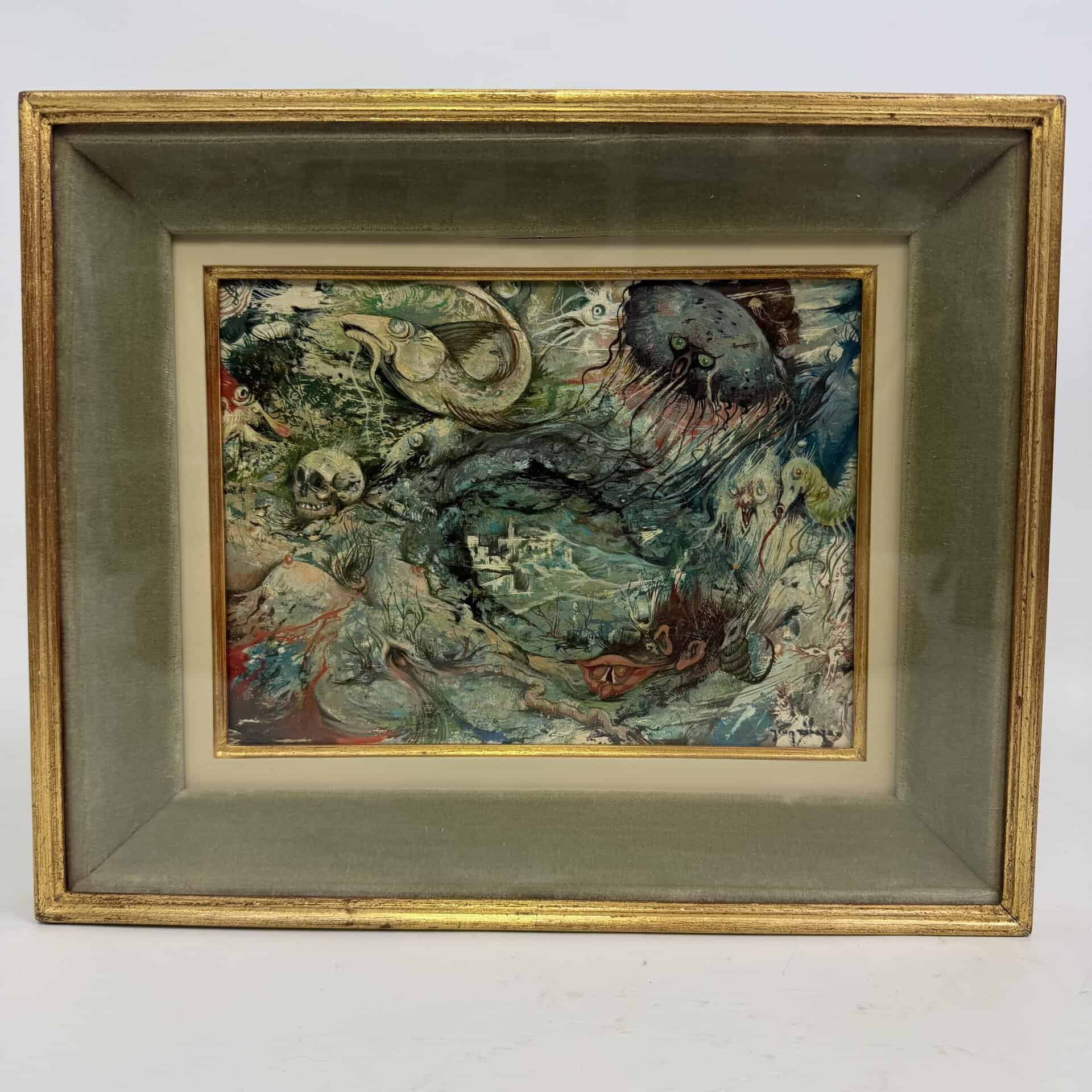
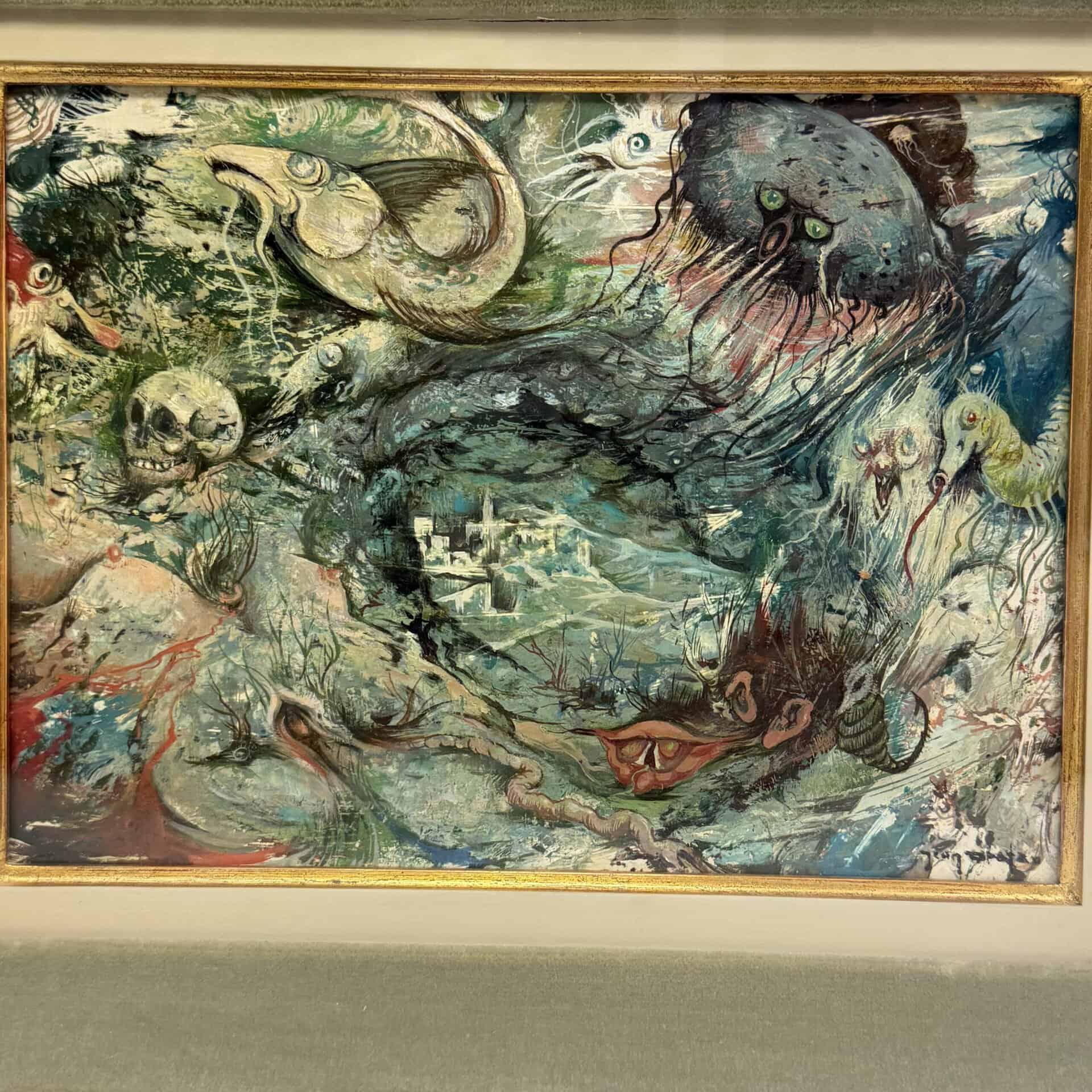
Oil on panel ‘An Imaginary World’ by Jean Dratz
€ 500


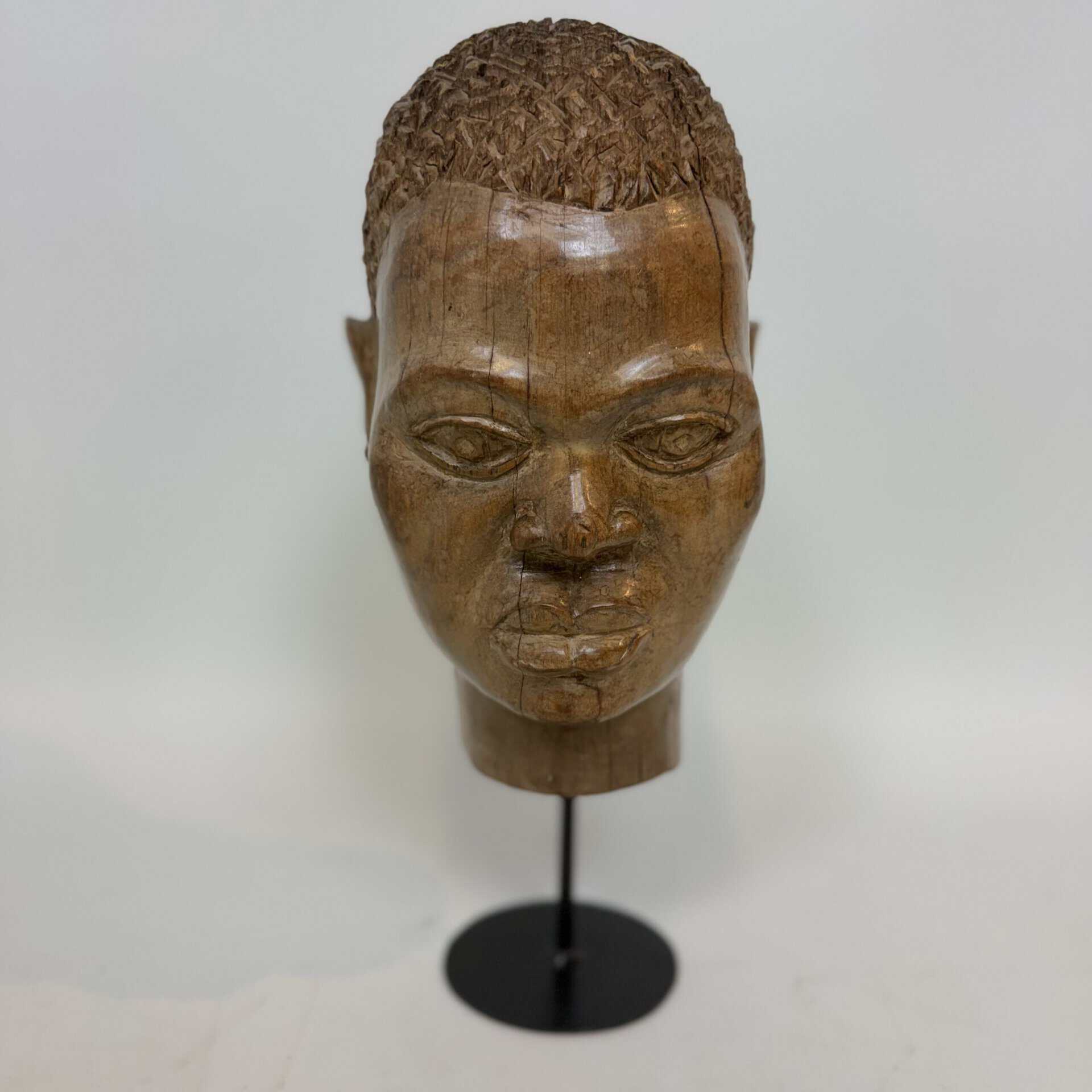
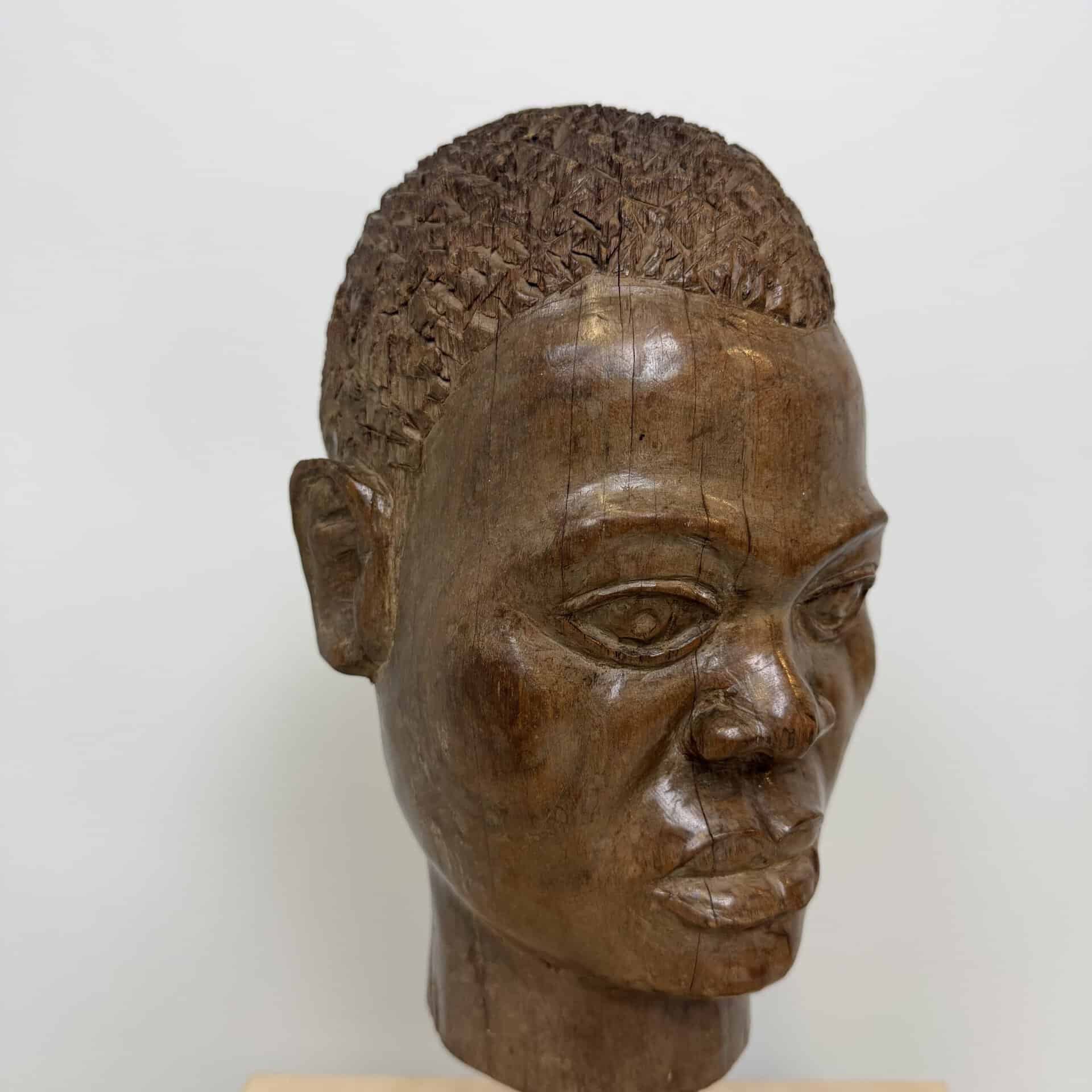
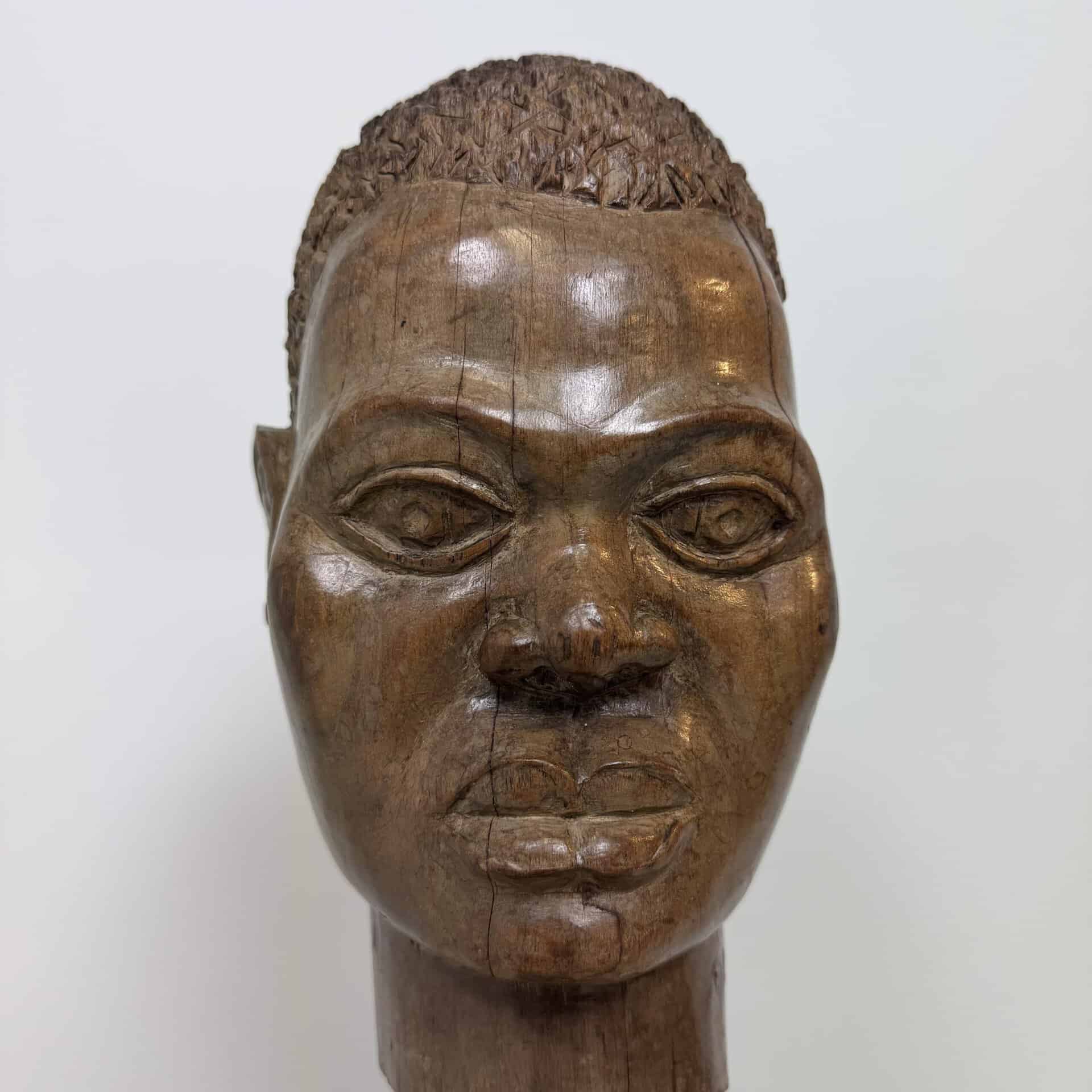
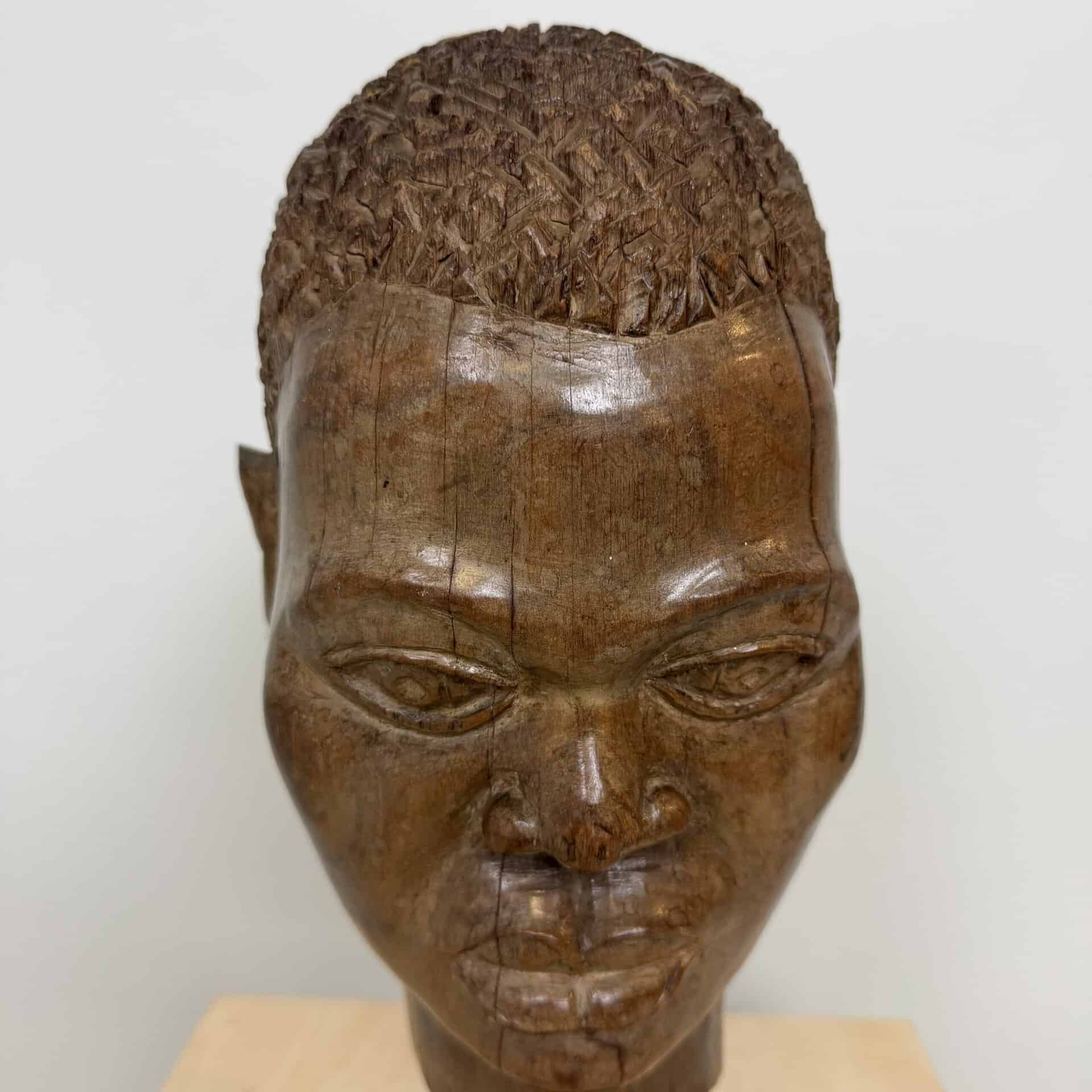
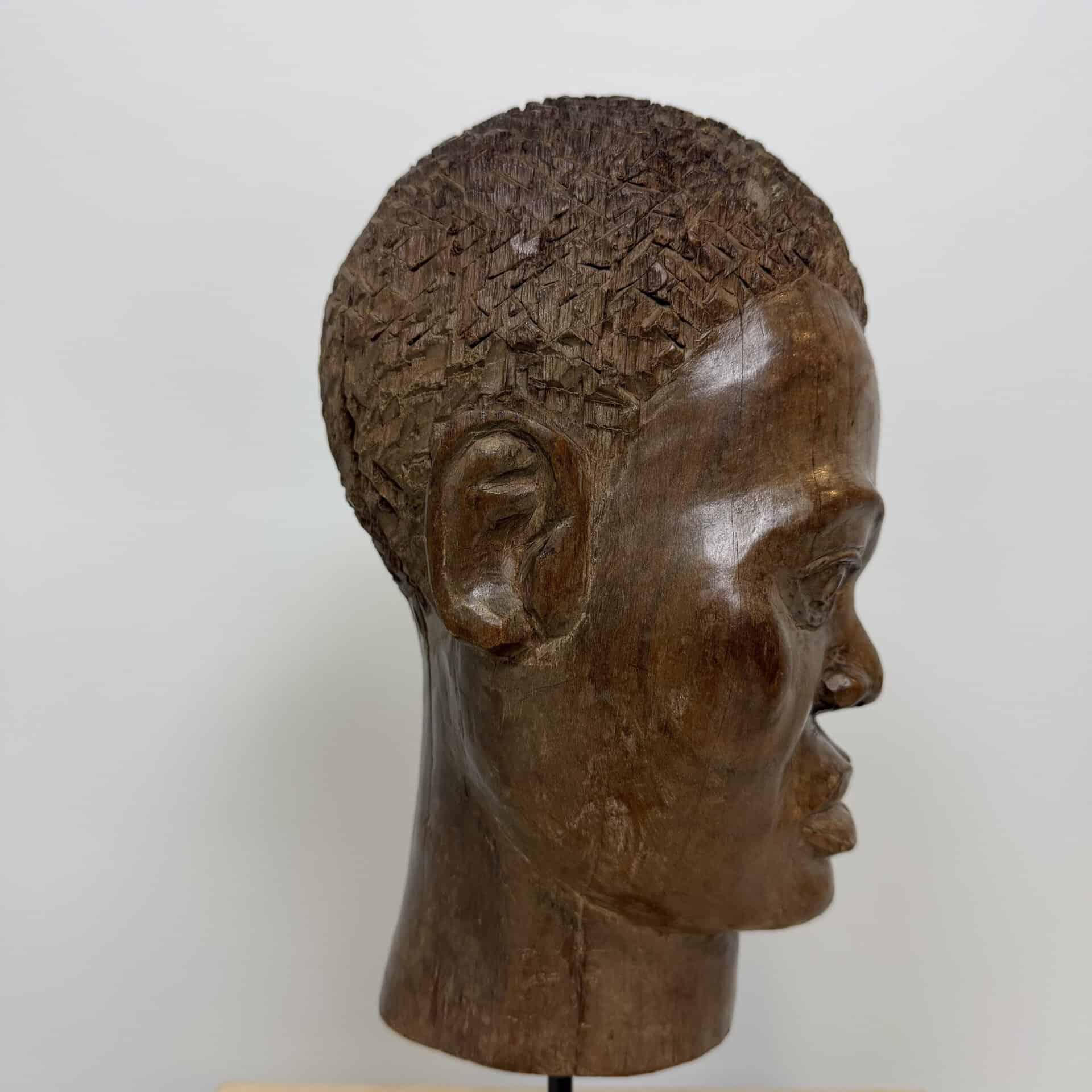
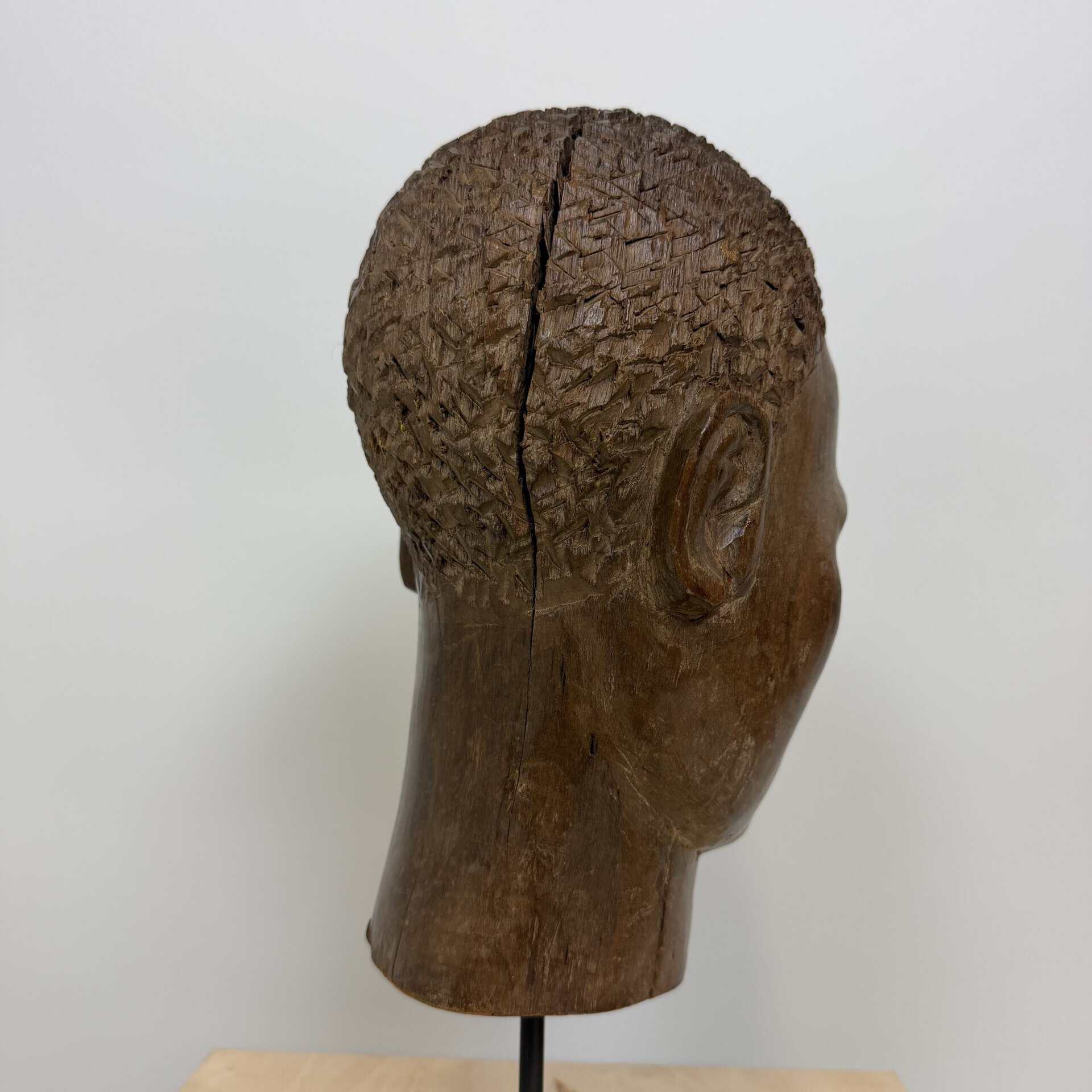
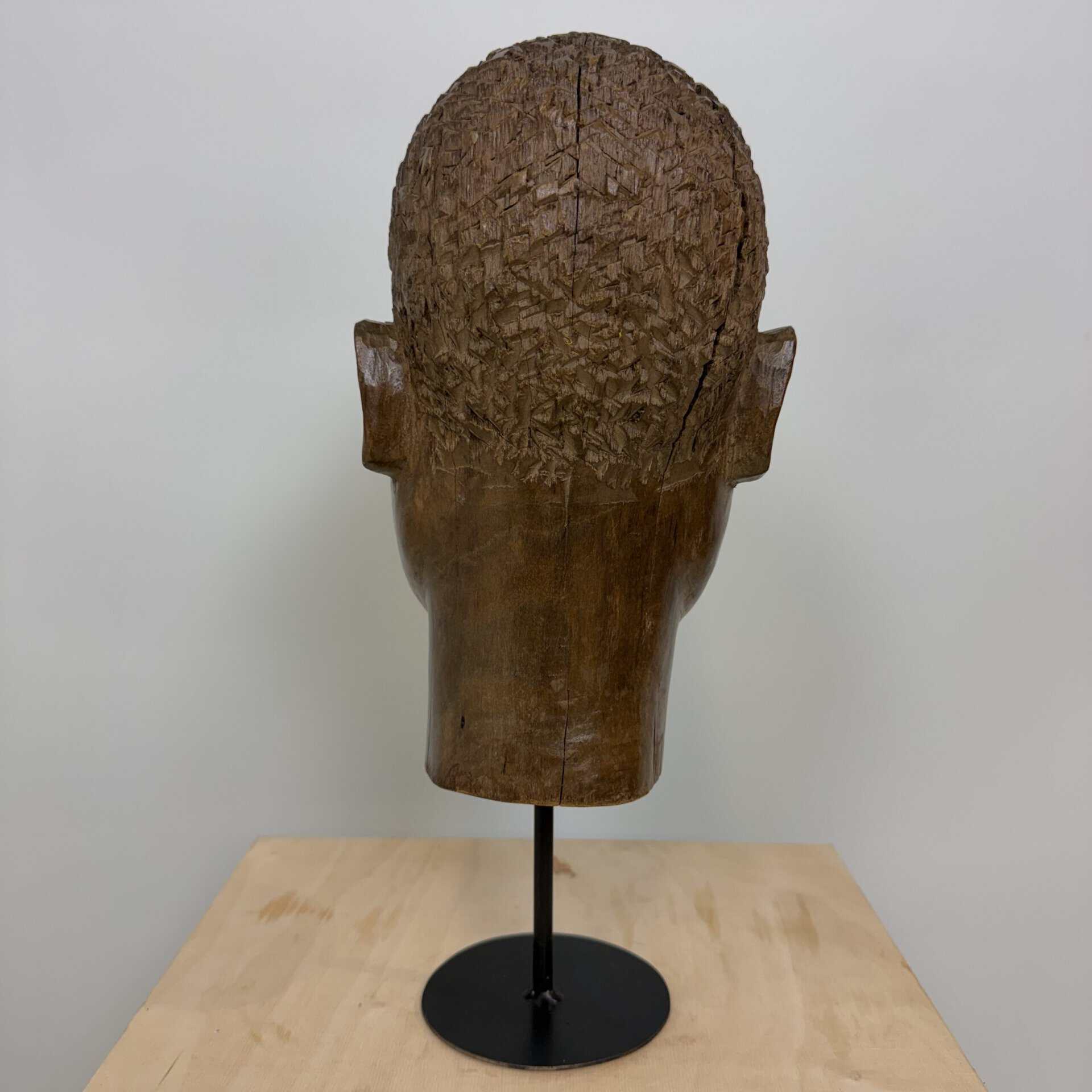
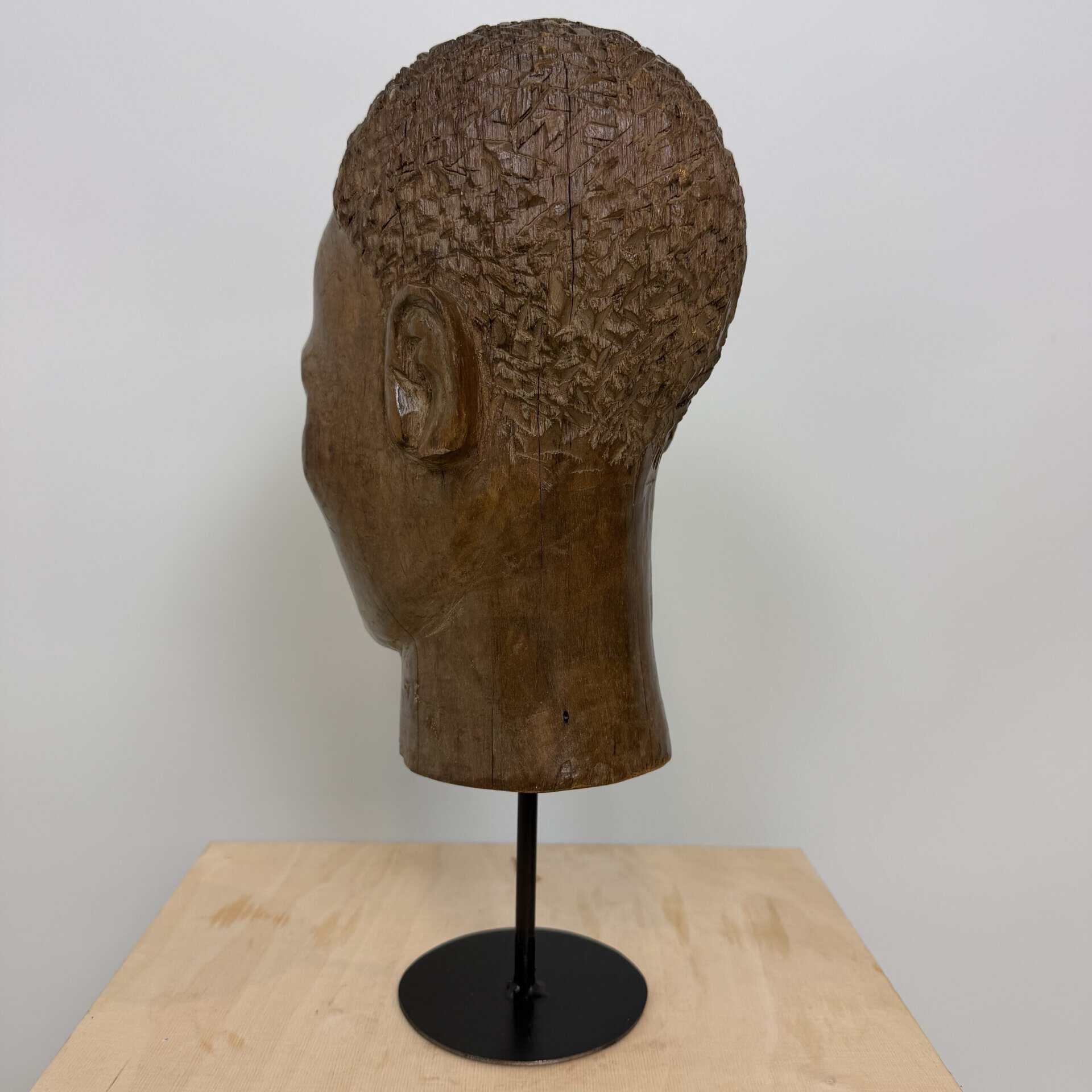
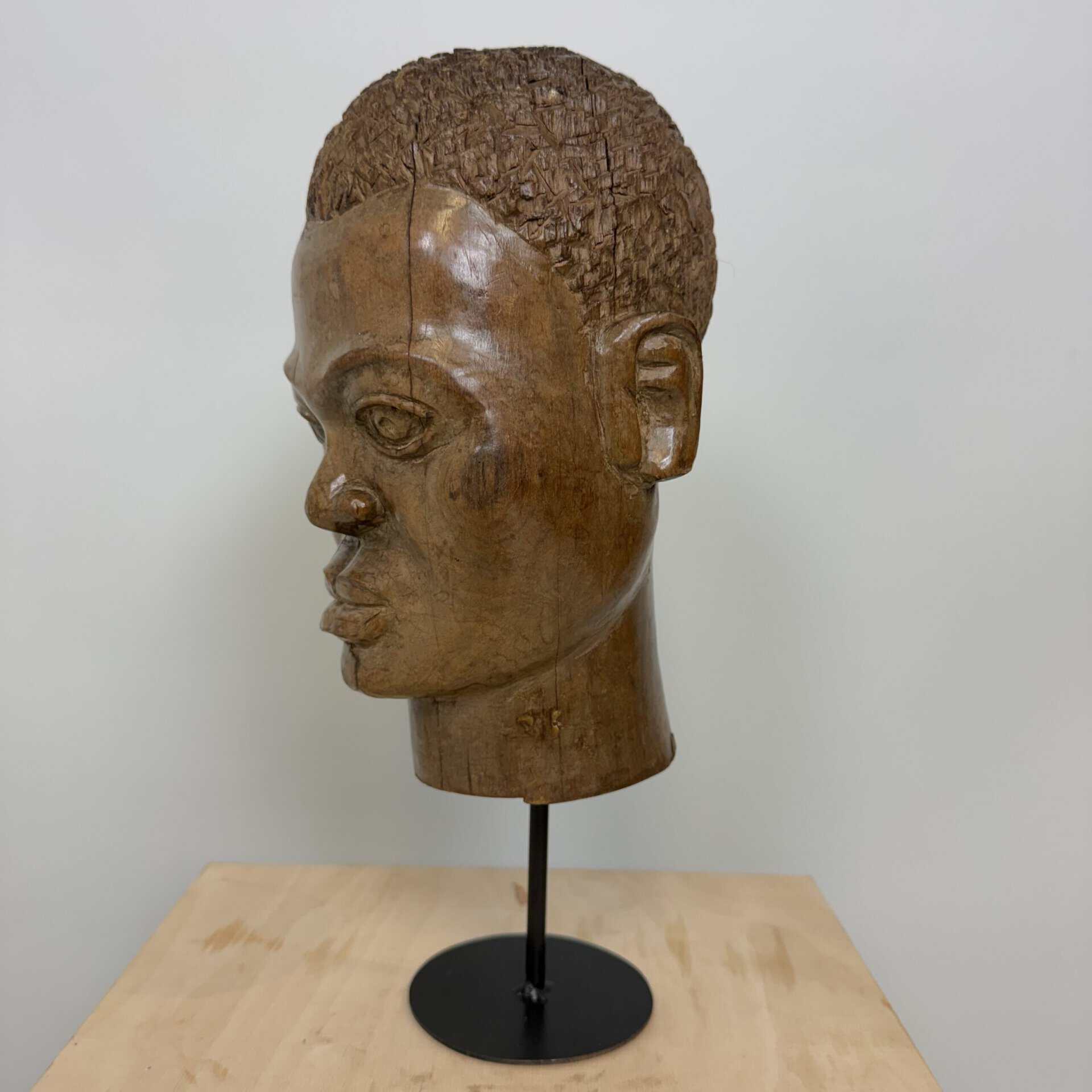
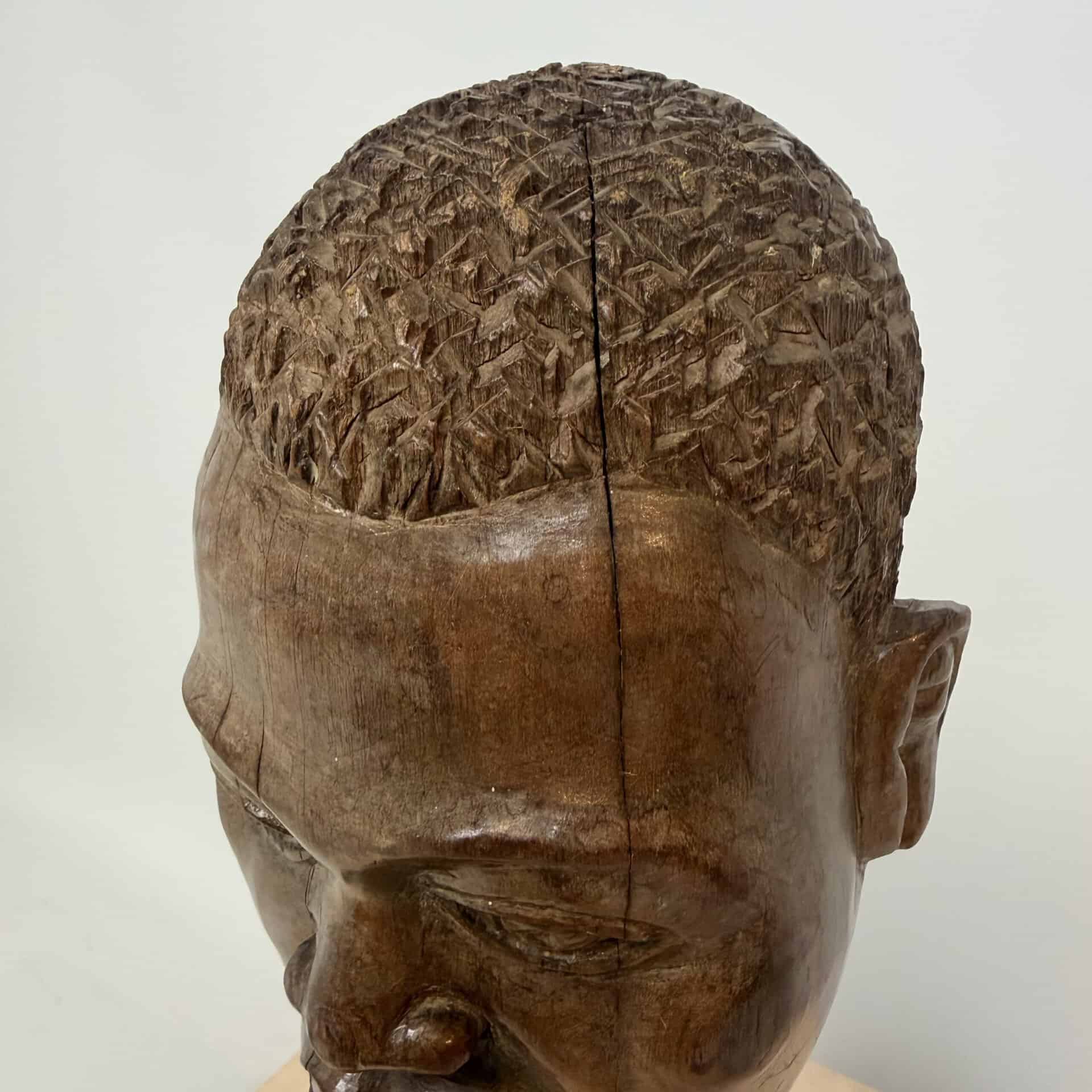
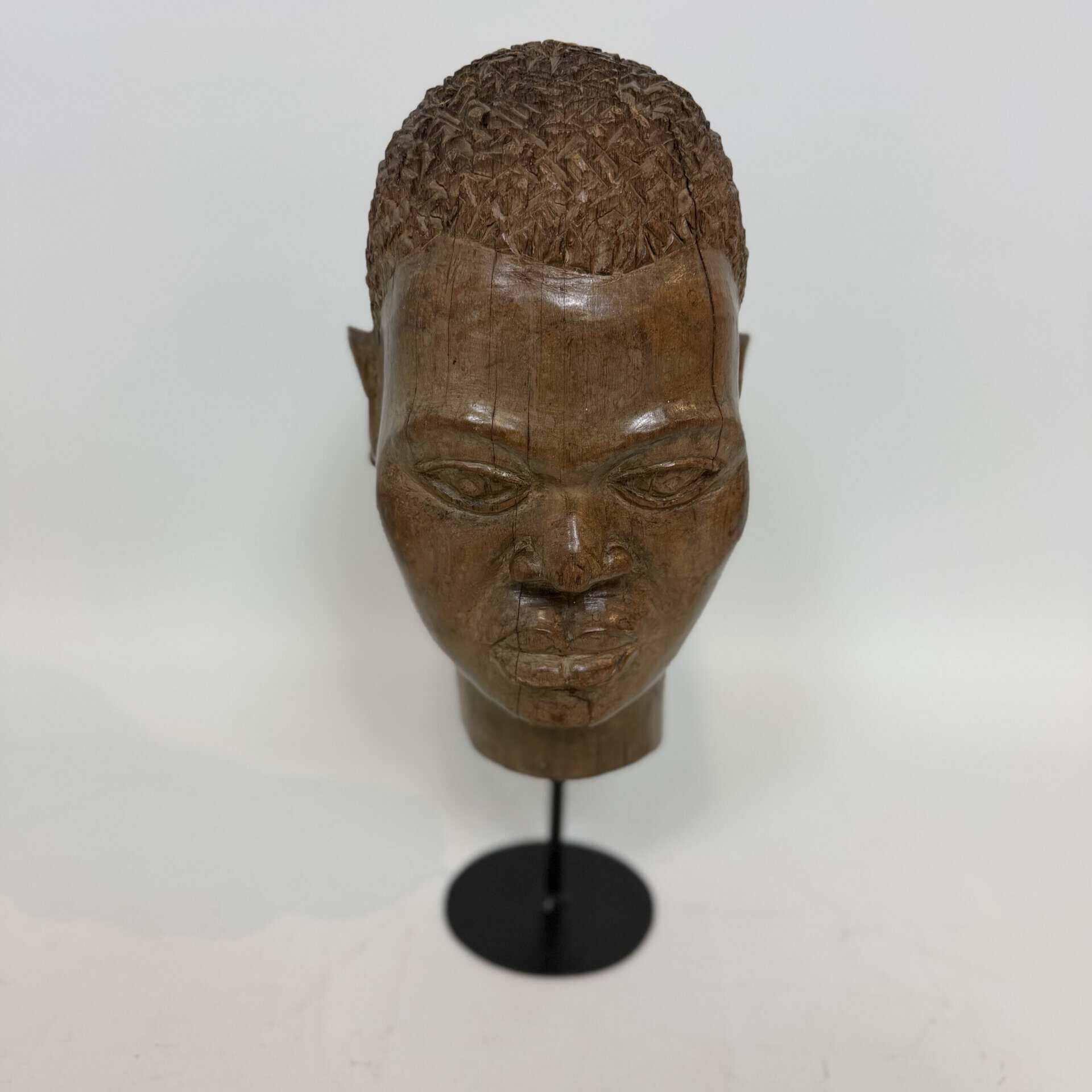
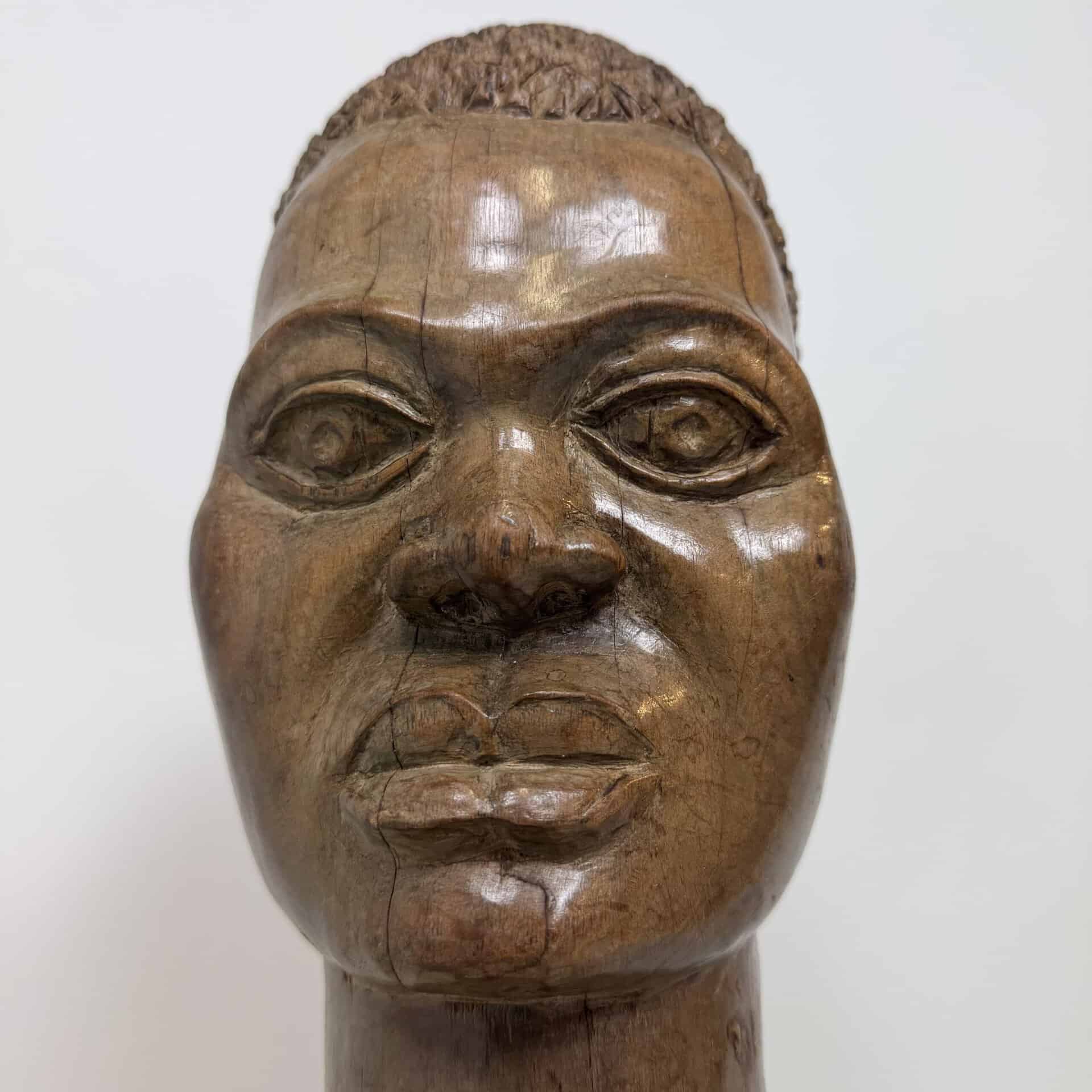
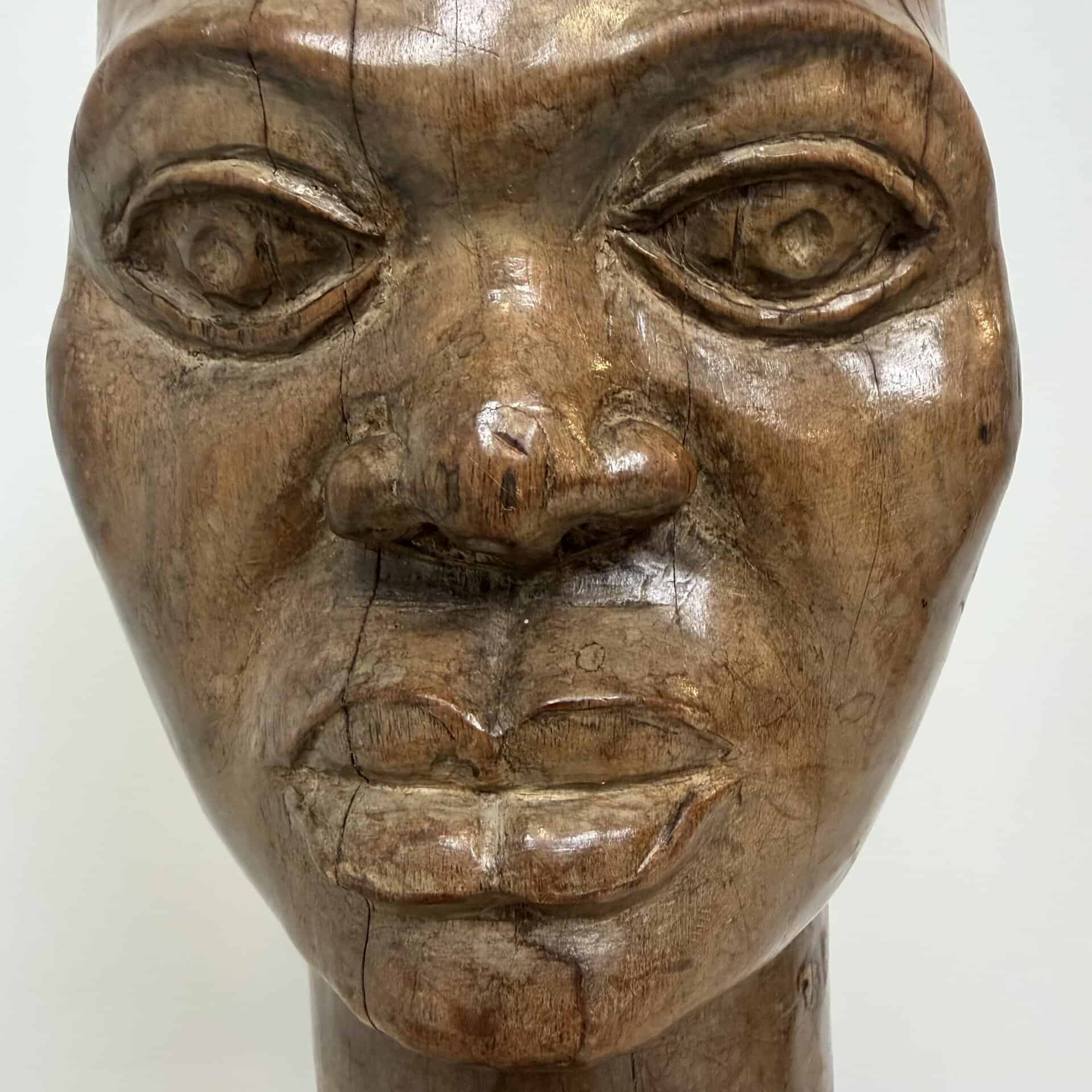
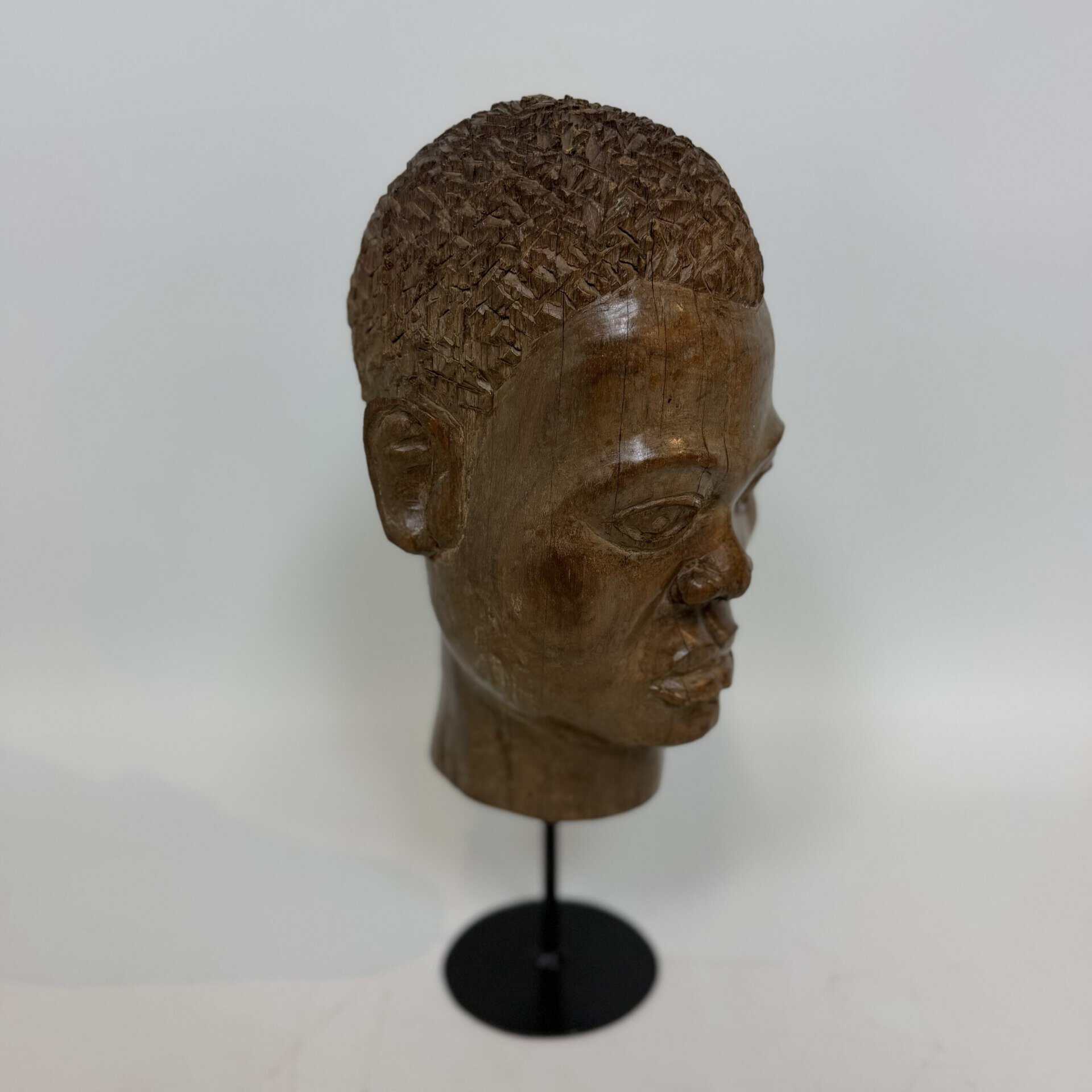
The sculpture is a high-quality example Congolese woodcarving, made out of tropical hardwood with a polished finish and socketed on a black metal base
Likely originating from the Katanga region, its acquisition in Lubumbashi during the 1960s—a pivotal decade for the Democratic Republic of the Congo—places it at a significant point in the region’s artistic history. This was a time of “Authenticité,” a cultural movement that encouraged Congolese artists to celebrate and preserve their heritage.
The naturalistic features and high degree of polished finish are characteristic of sculptures produced in the Lubumbashi area during the mid-20th century. During this period, the city was a thriving artistic centre where traditional carving techniques were often adapted into more refined, naturalistic forms for both local appreciation and the growing international market
While the piece is a specialised urban creation, the facial structure (high forehead, almond-shaped eyes, and full lips) draws from the classical aesthetic traditions of the Luba and Hemba people, who are indigenous to the greater Katanga region
Total weight: 3,6 kg
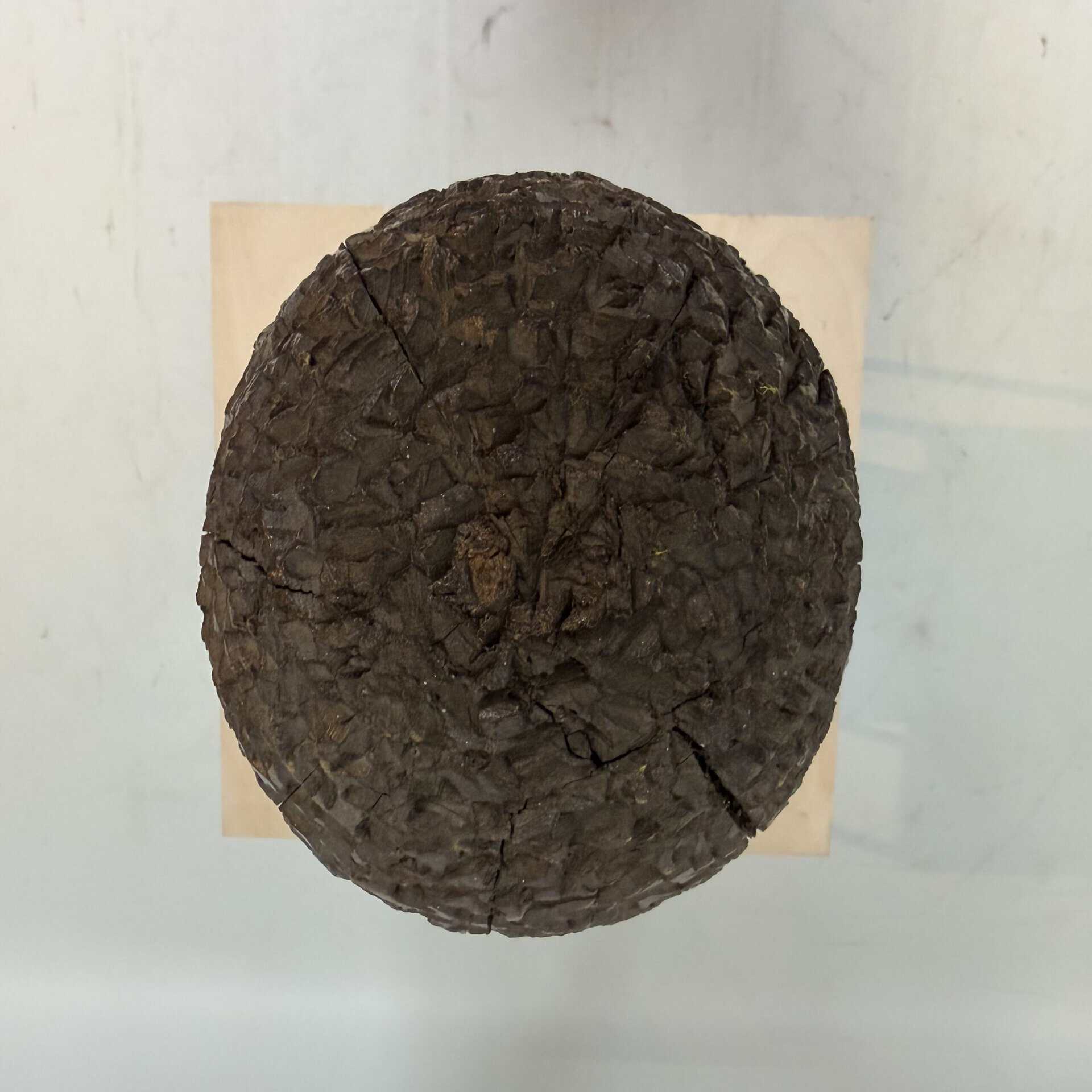
The work shows cracks but remains sturdy and intact
Congolese art form the 60s