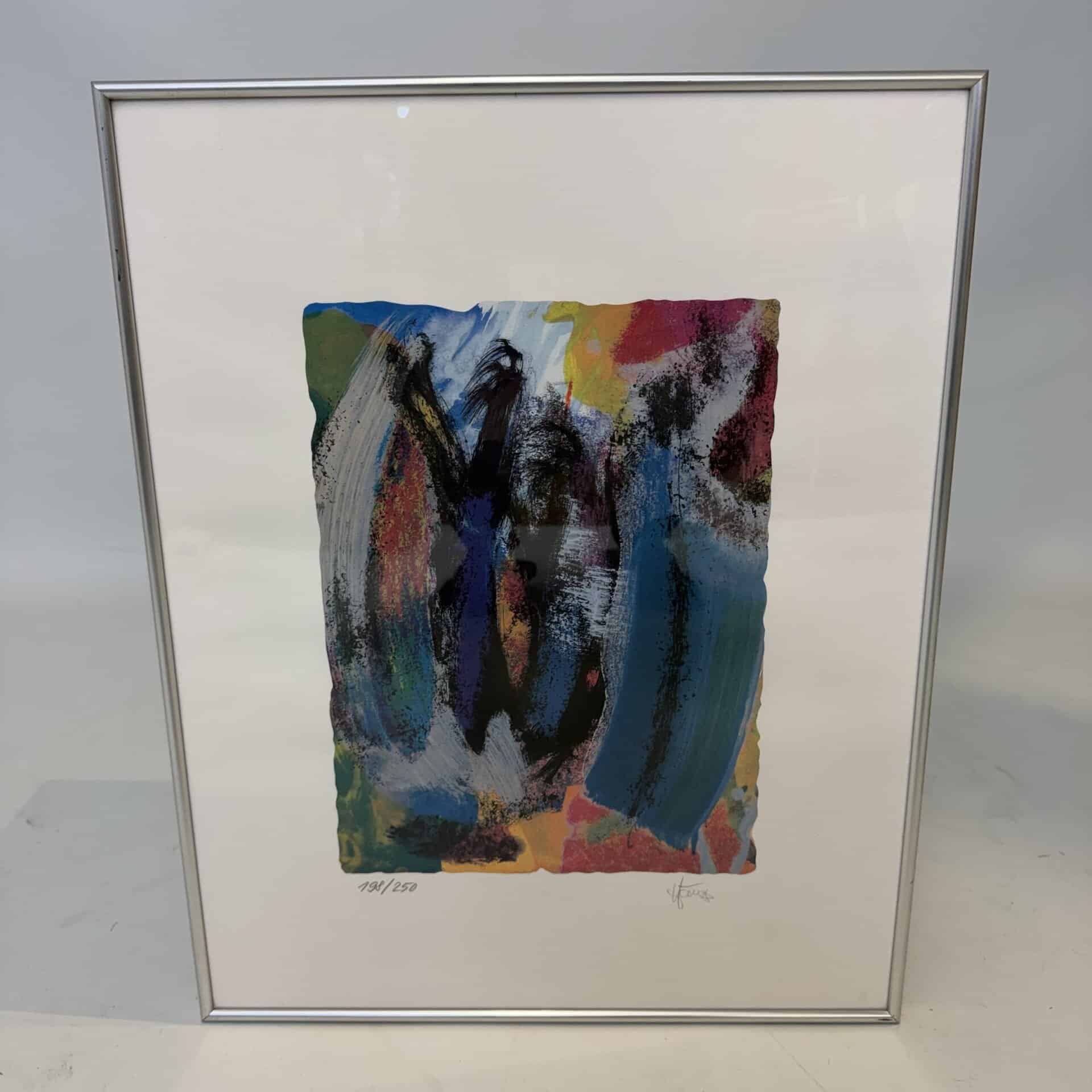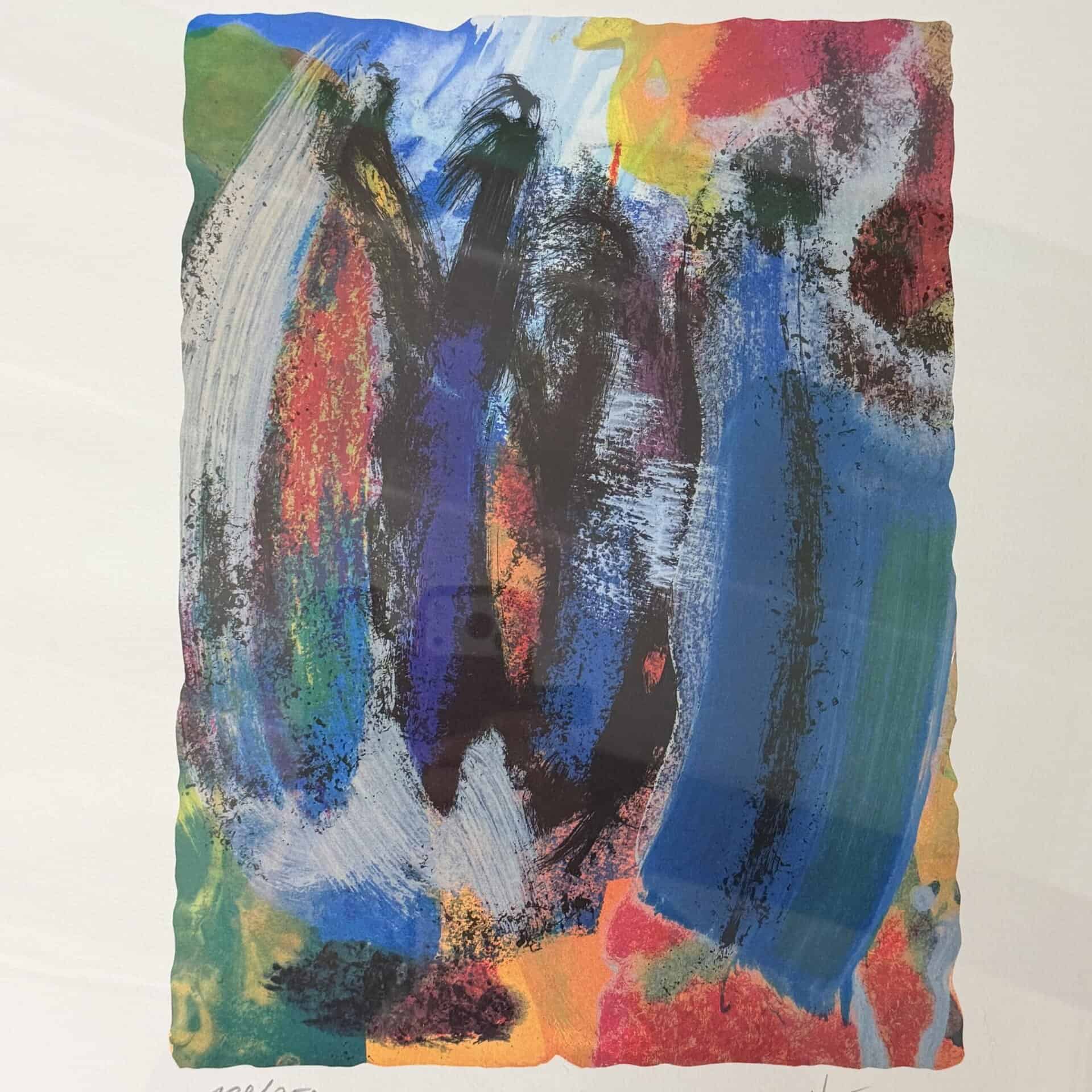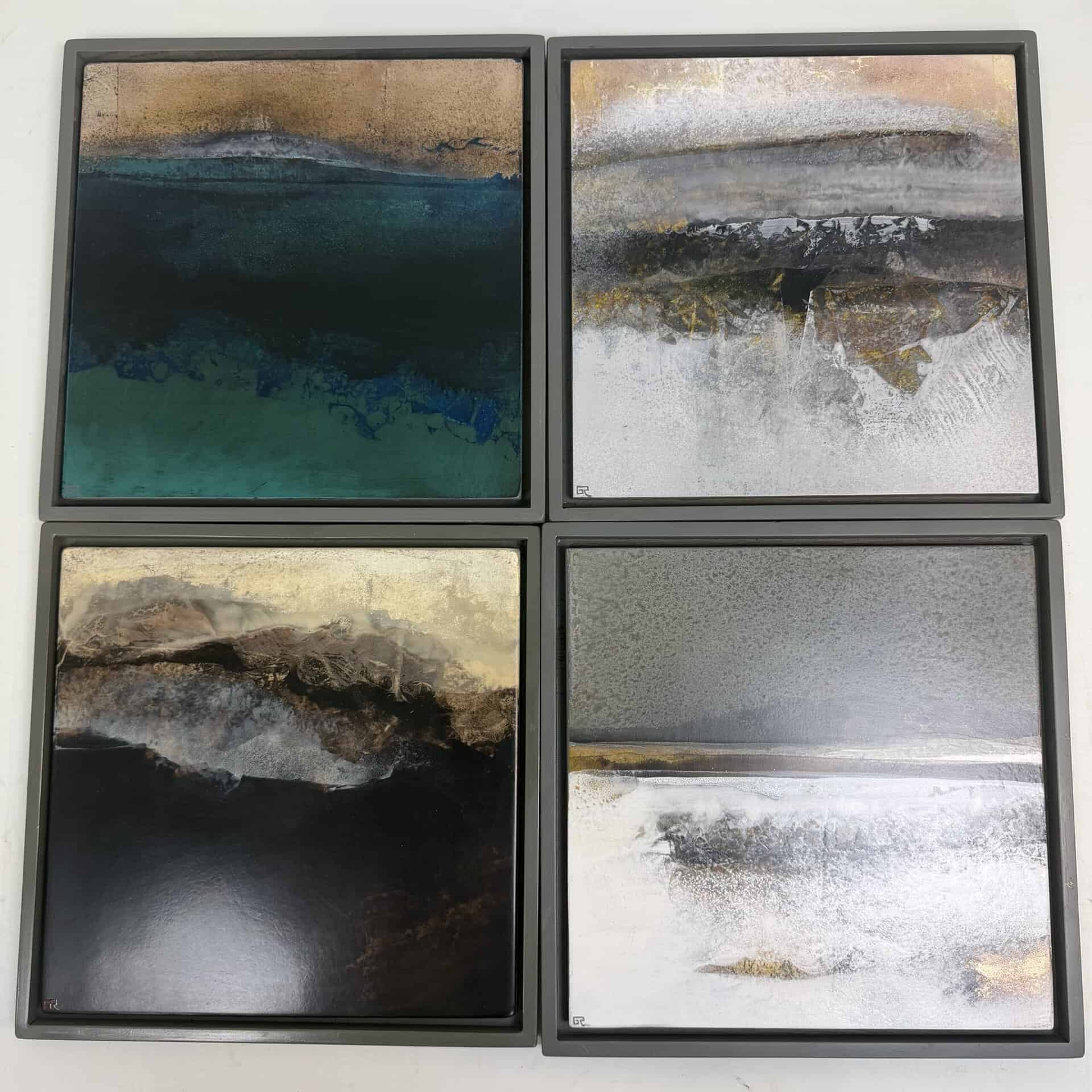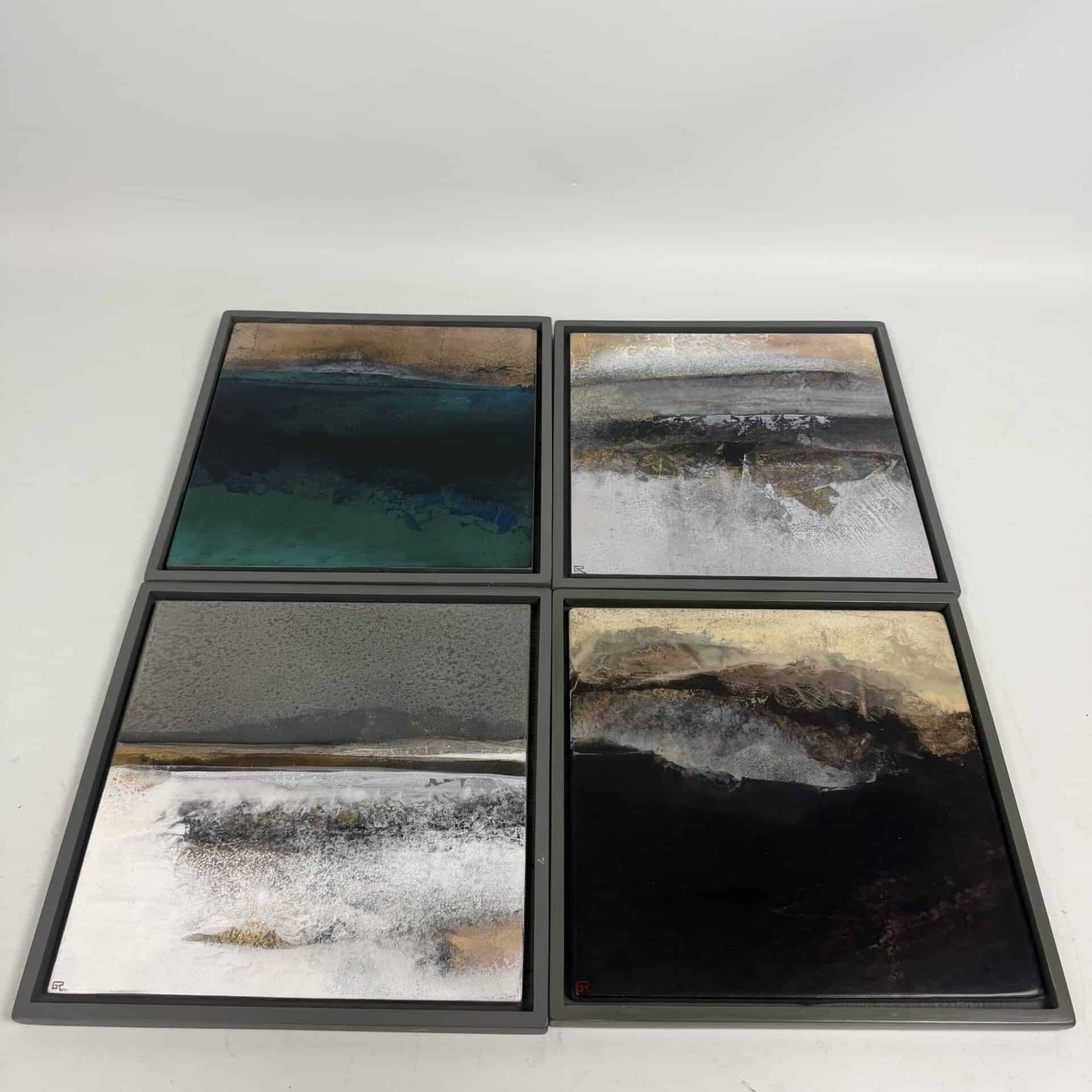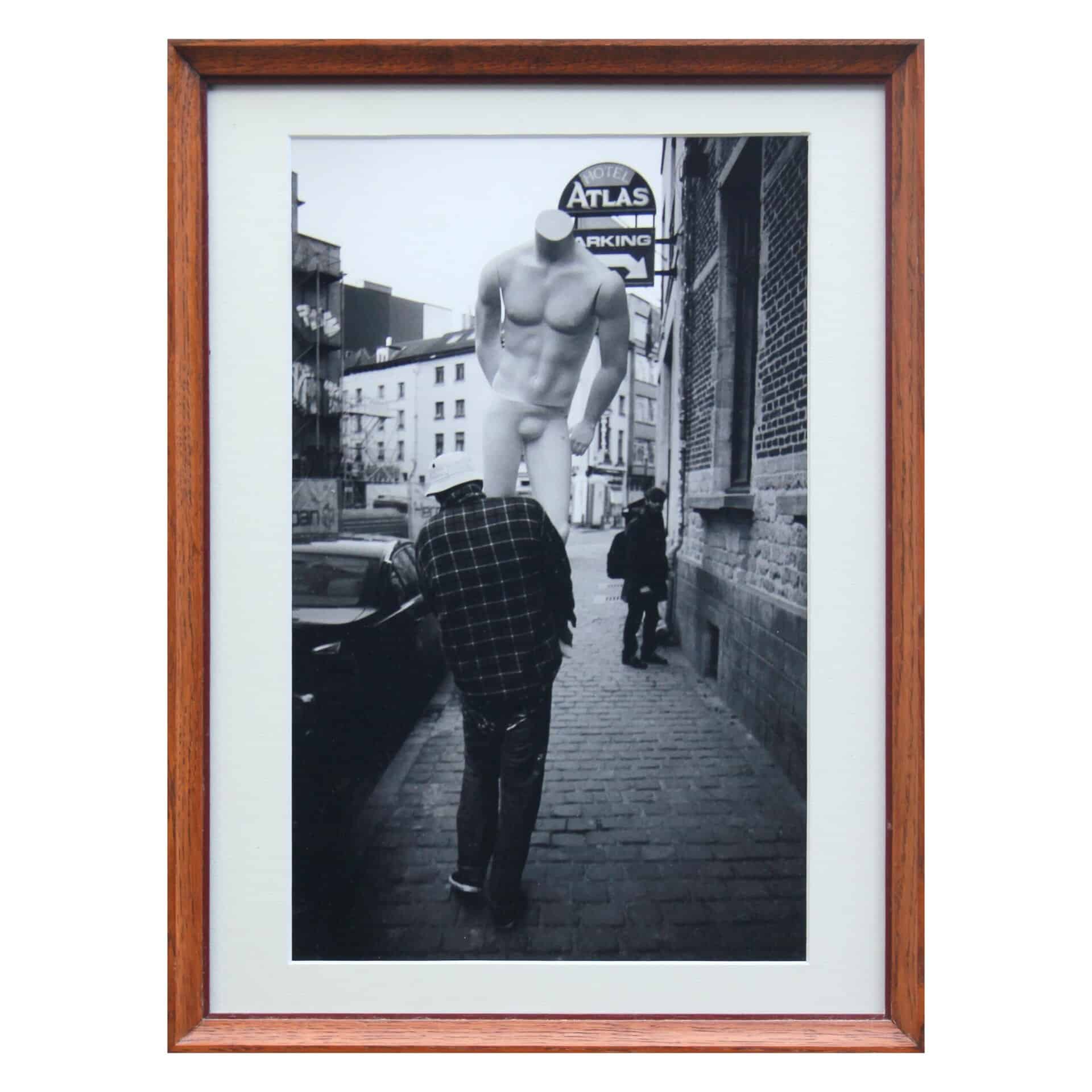
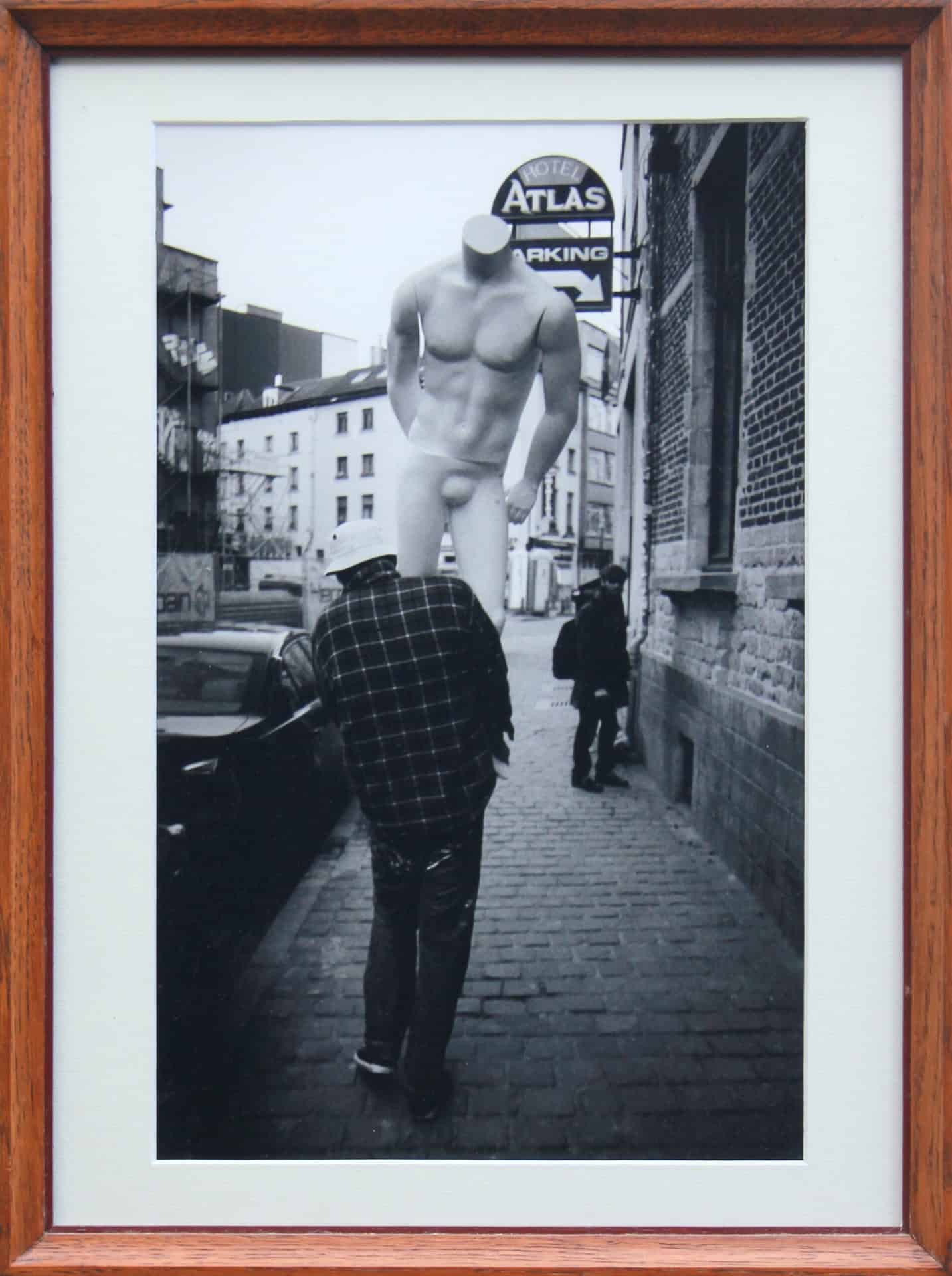
‘The weight of the world’ by Sam Vanoverschelde
€ 250


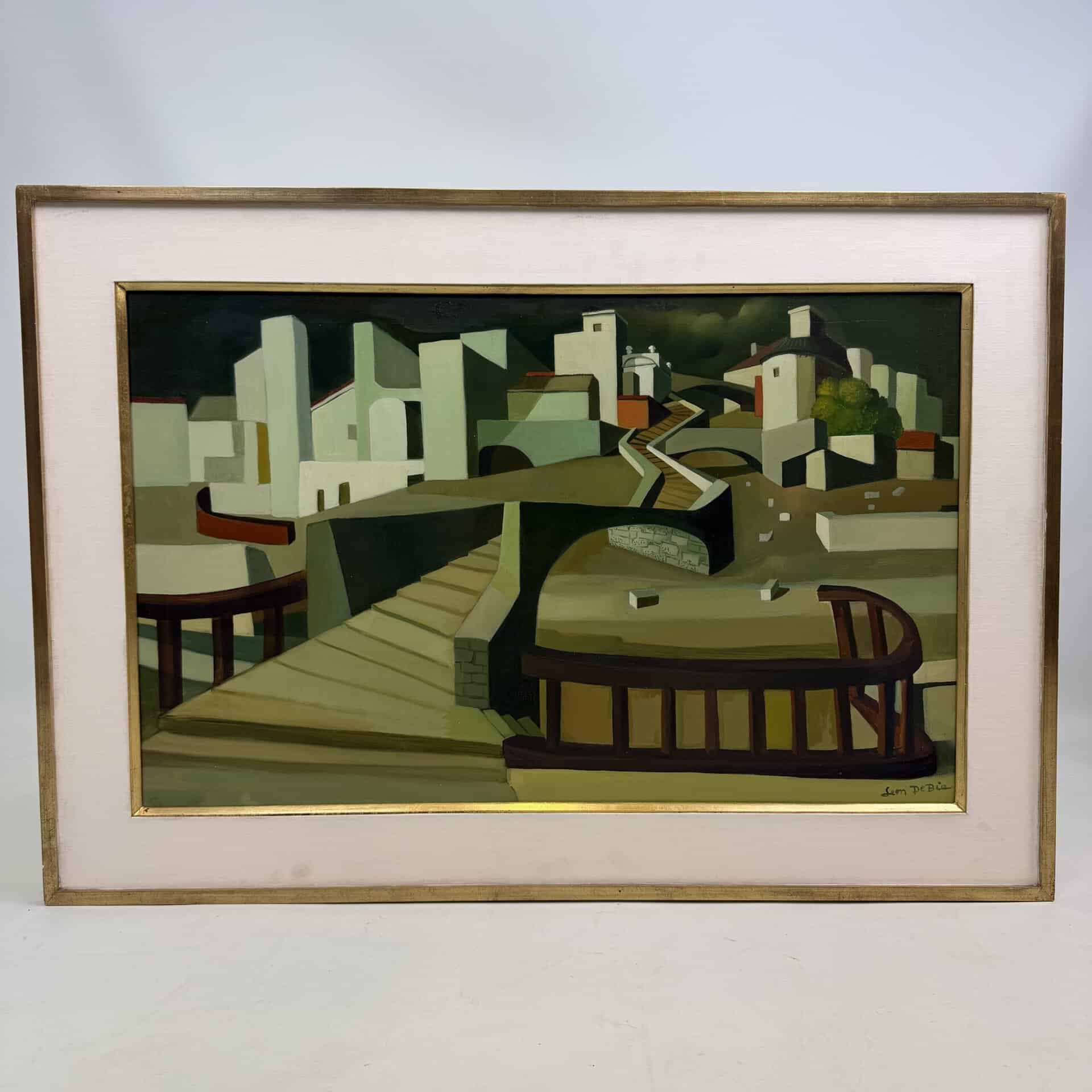
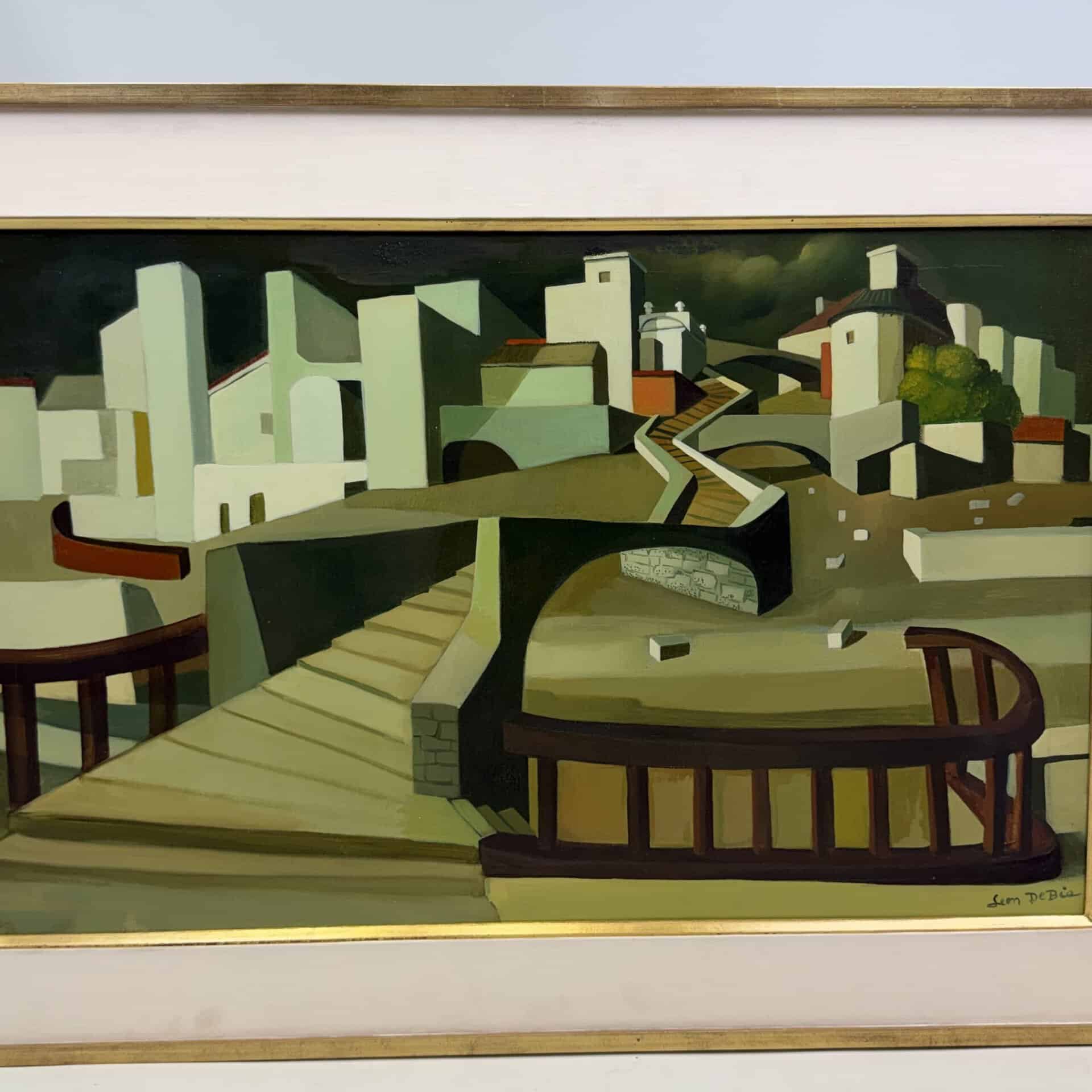
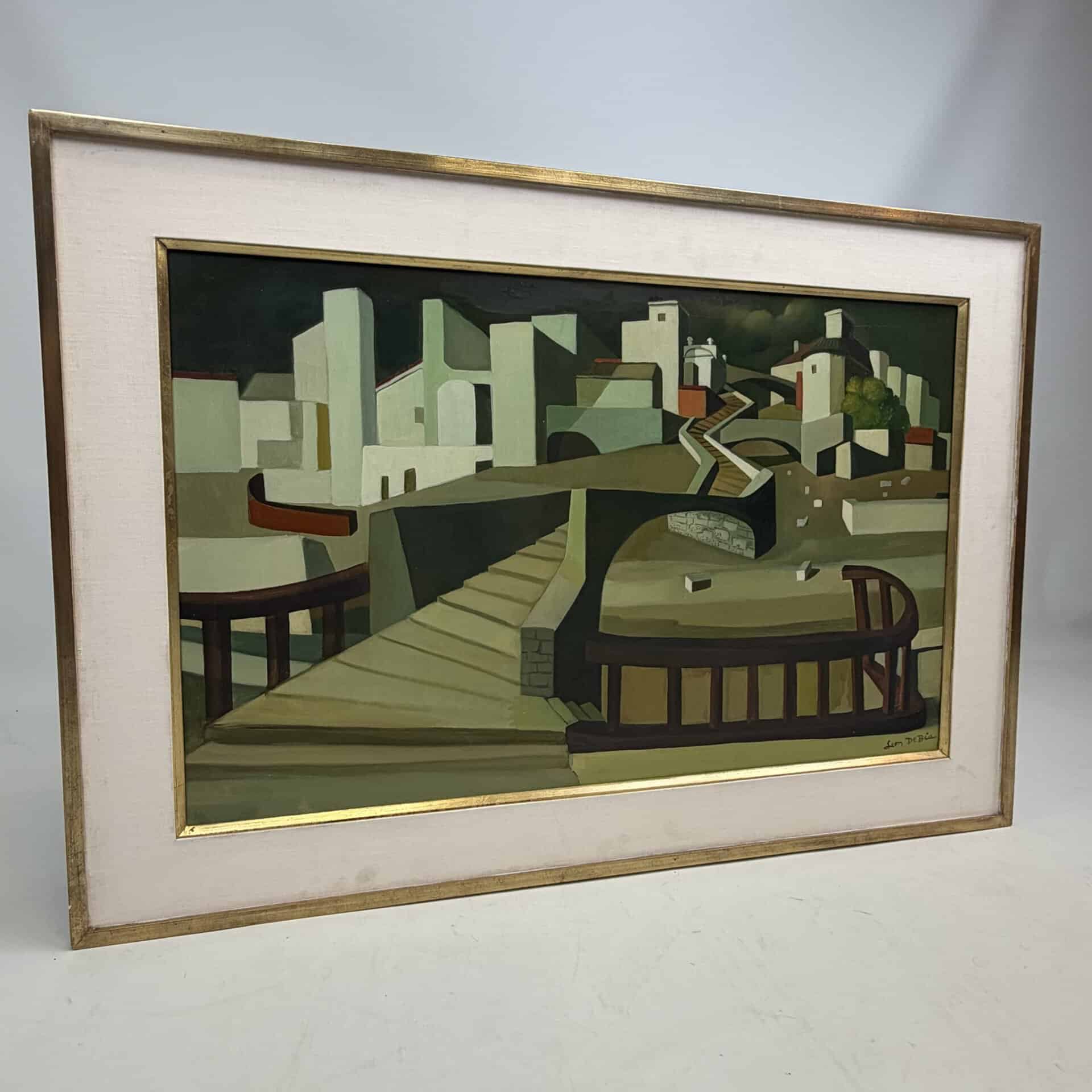
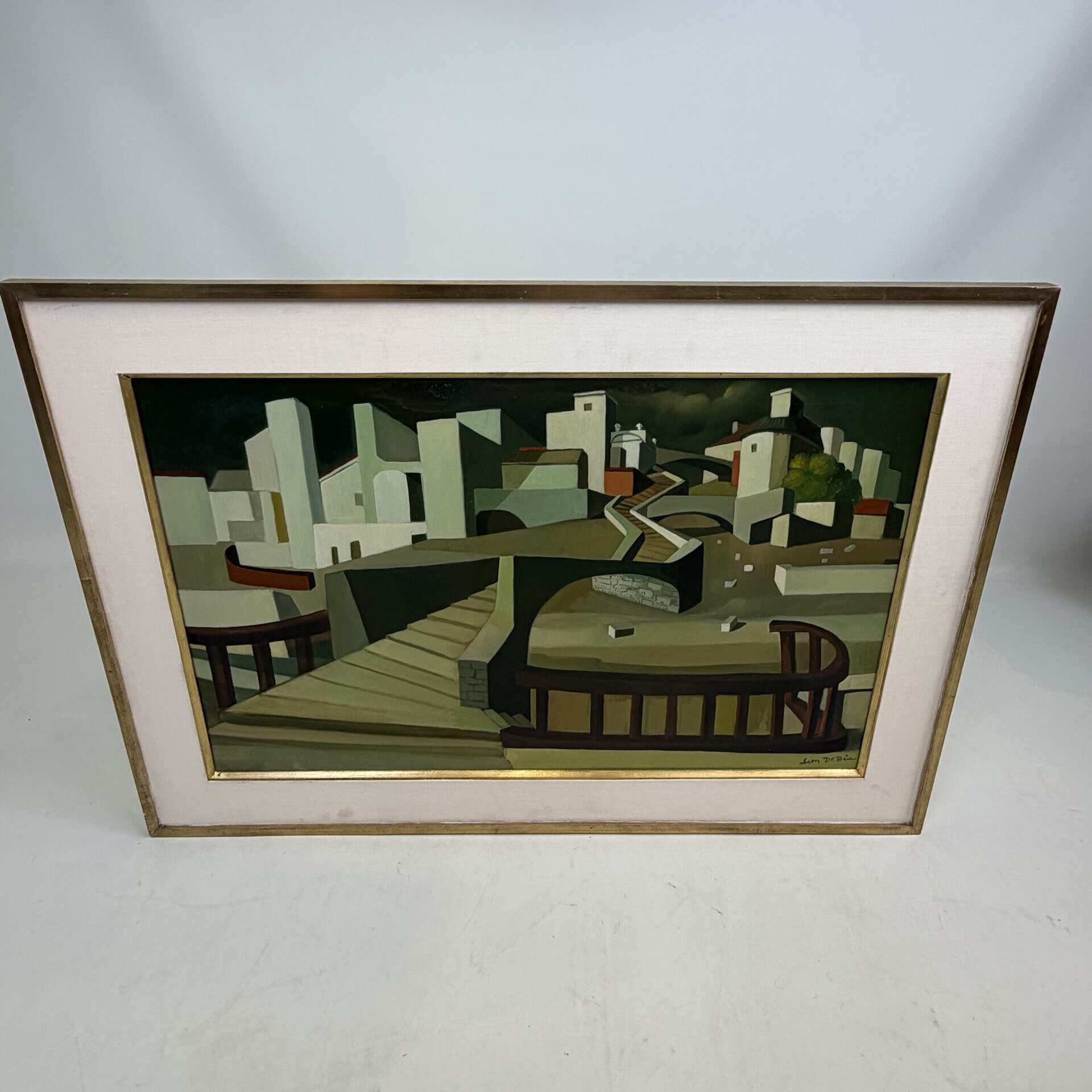
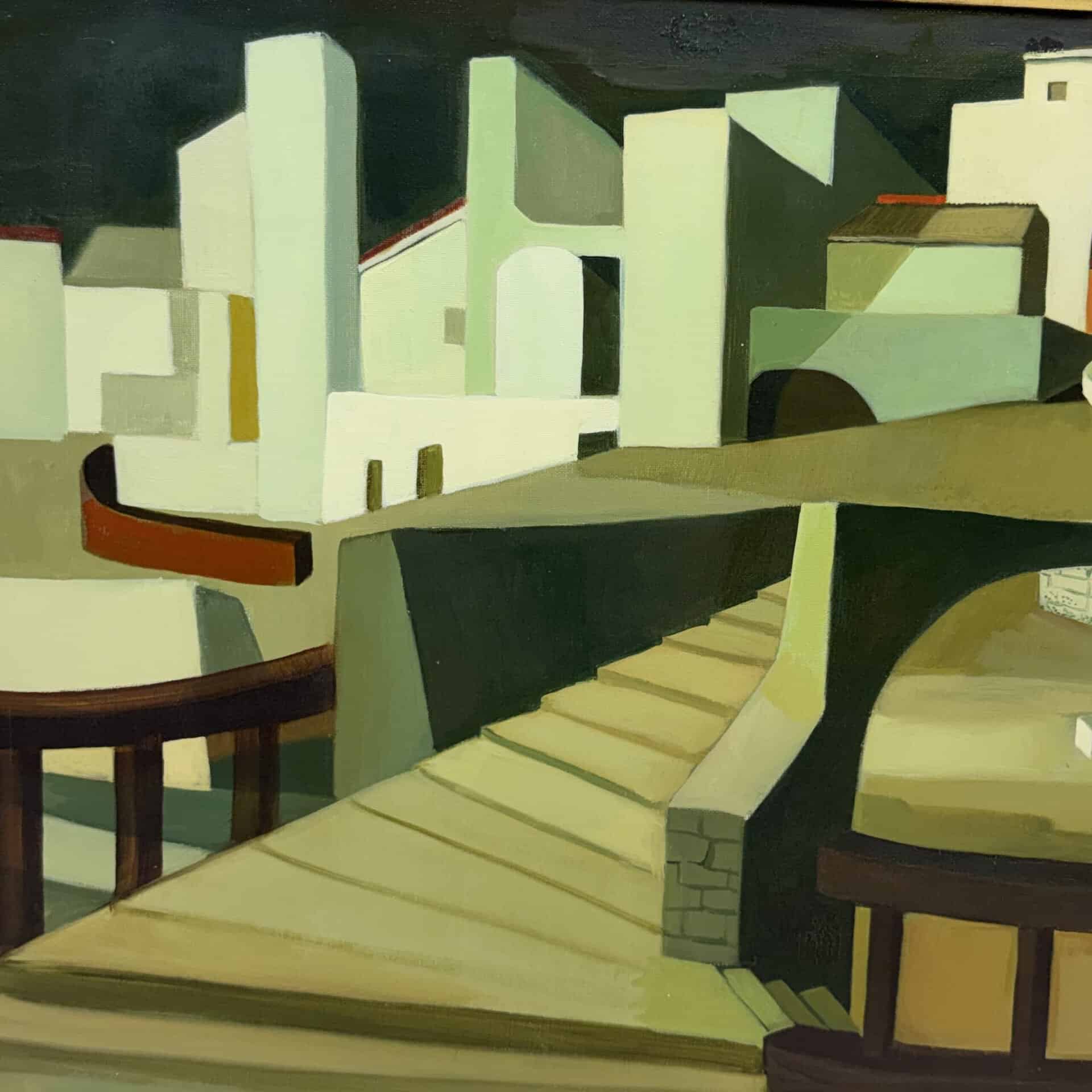
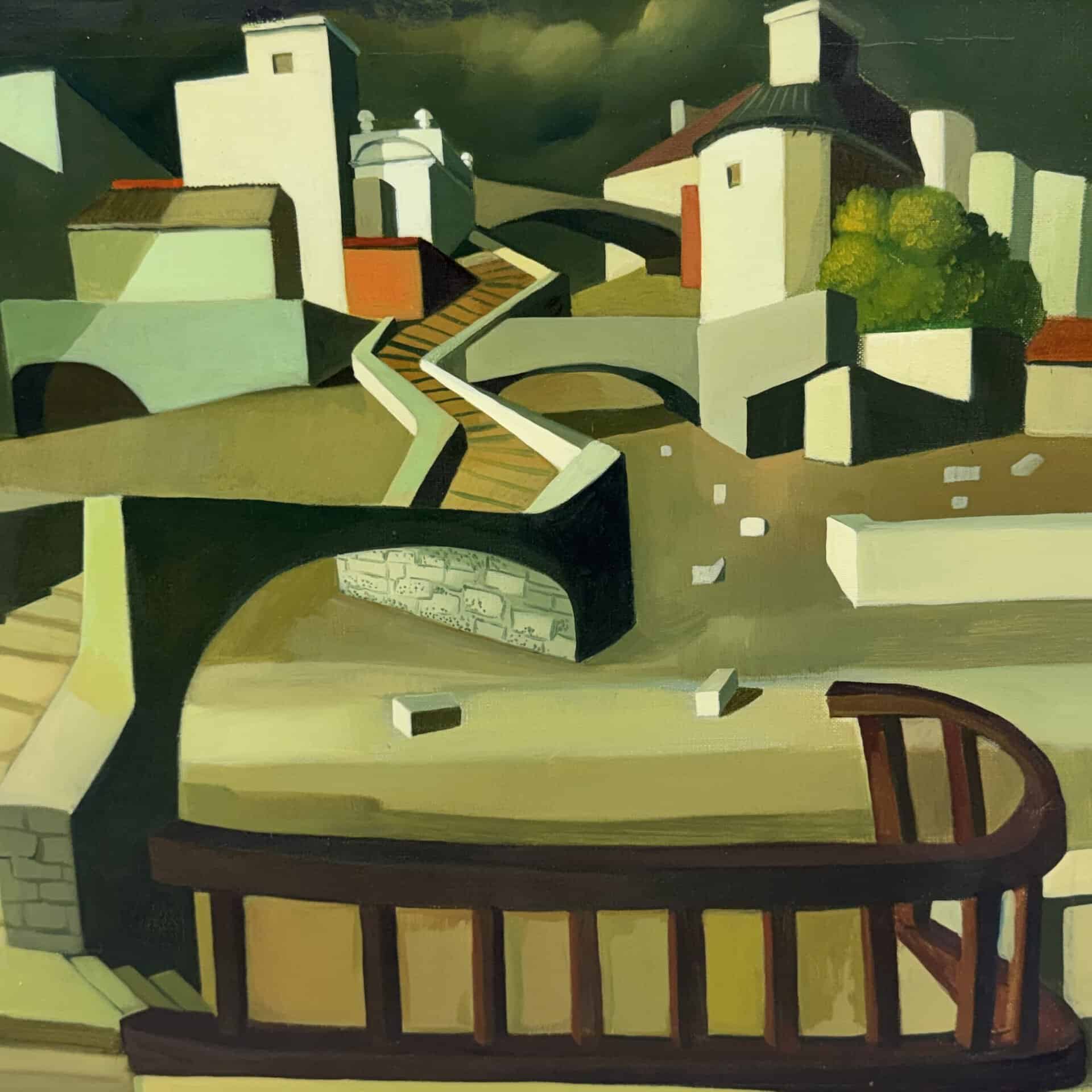
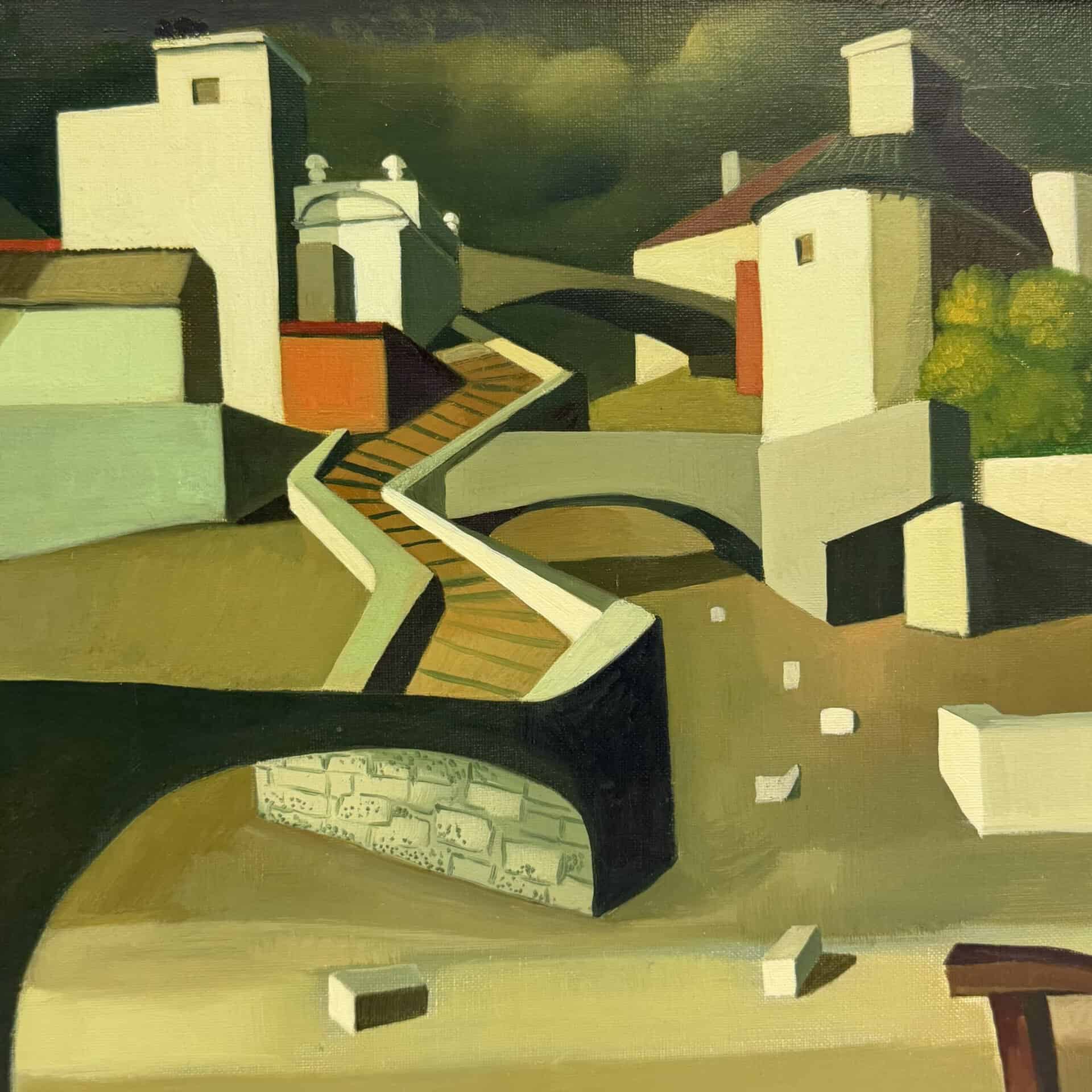
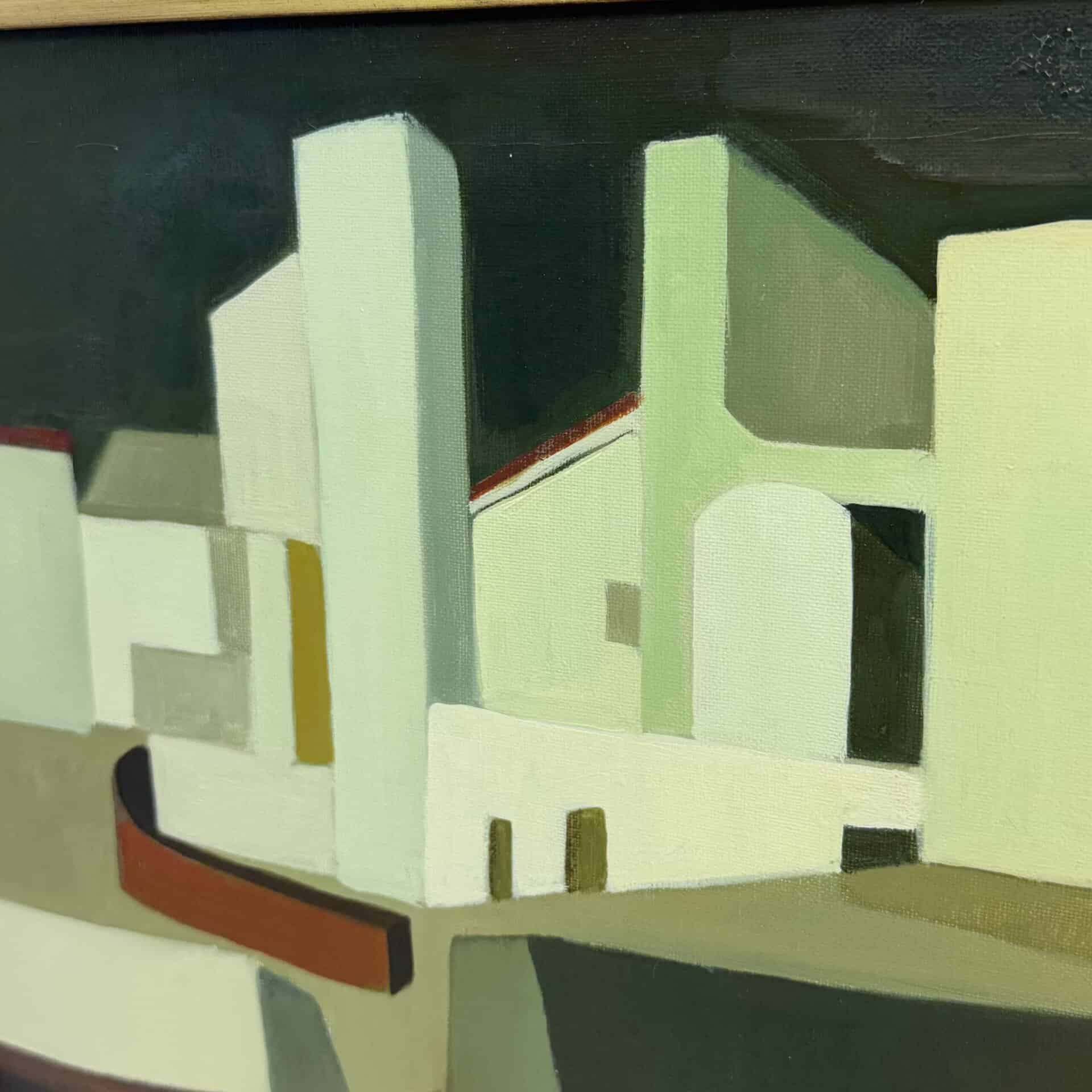
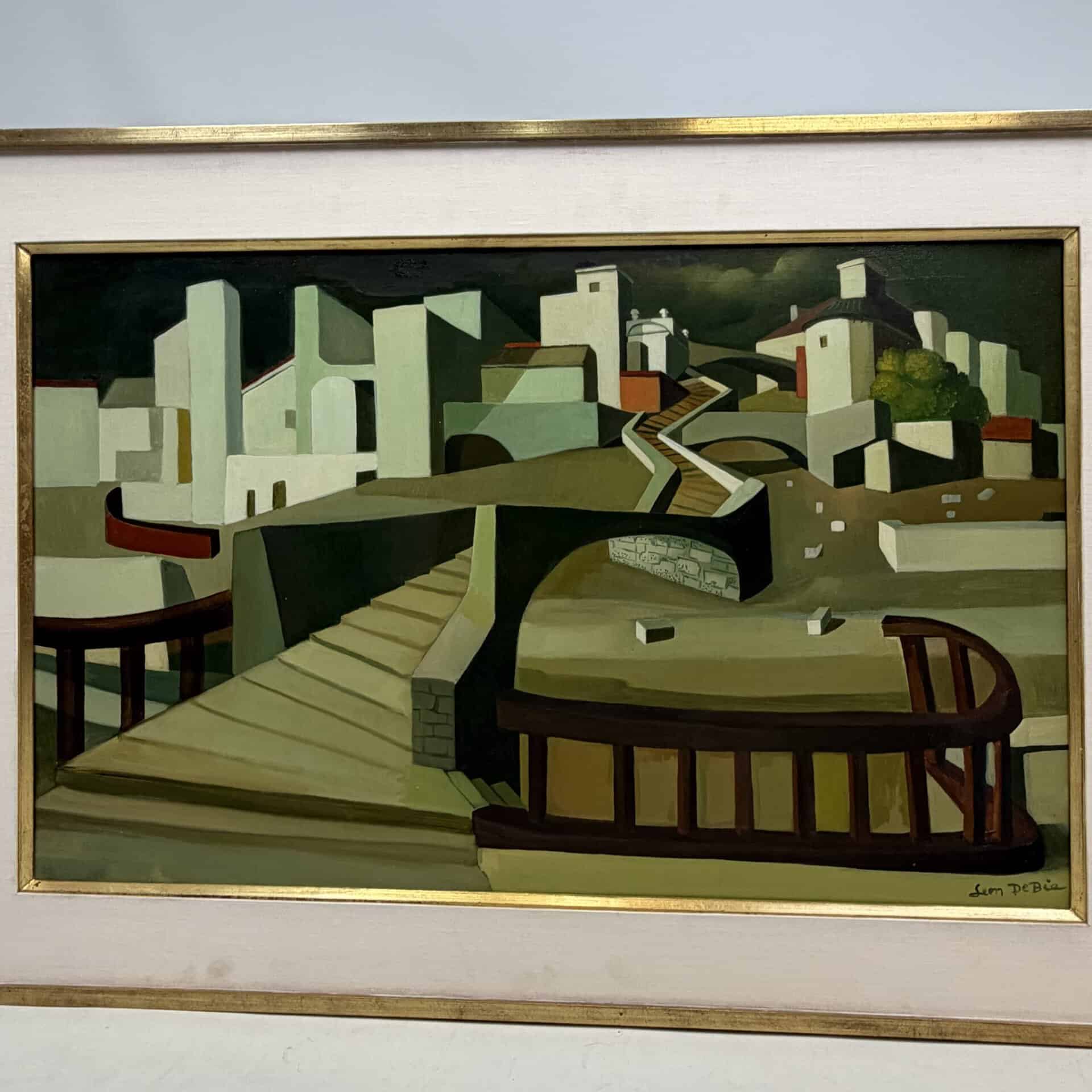

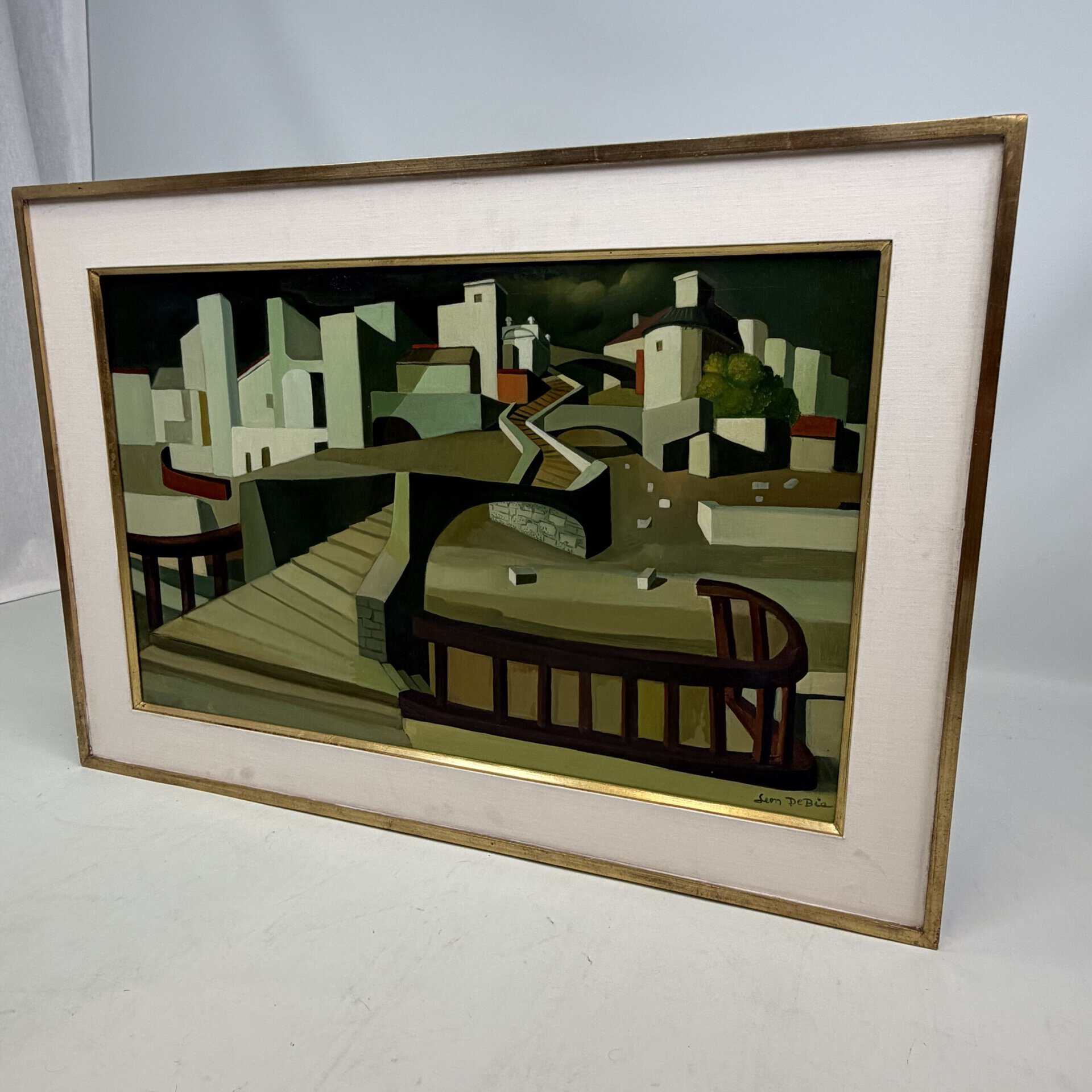
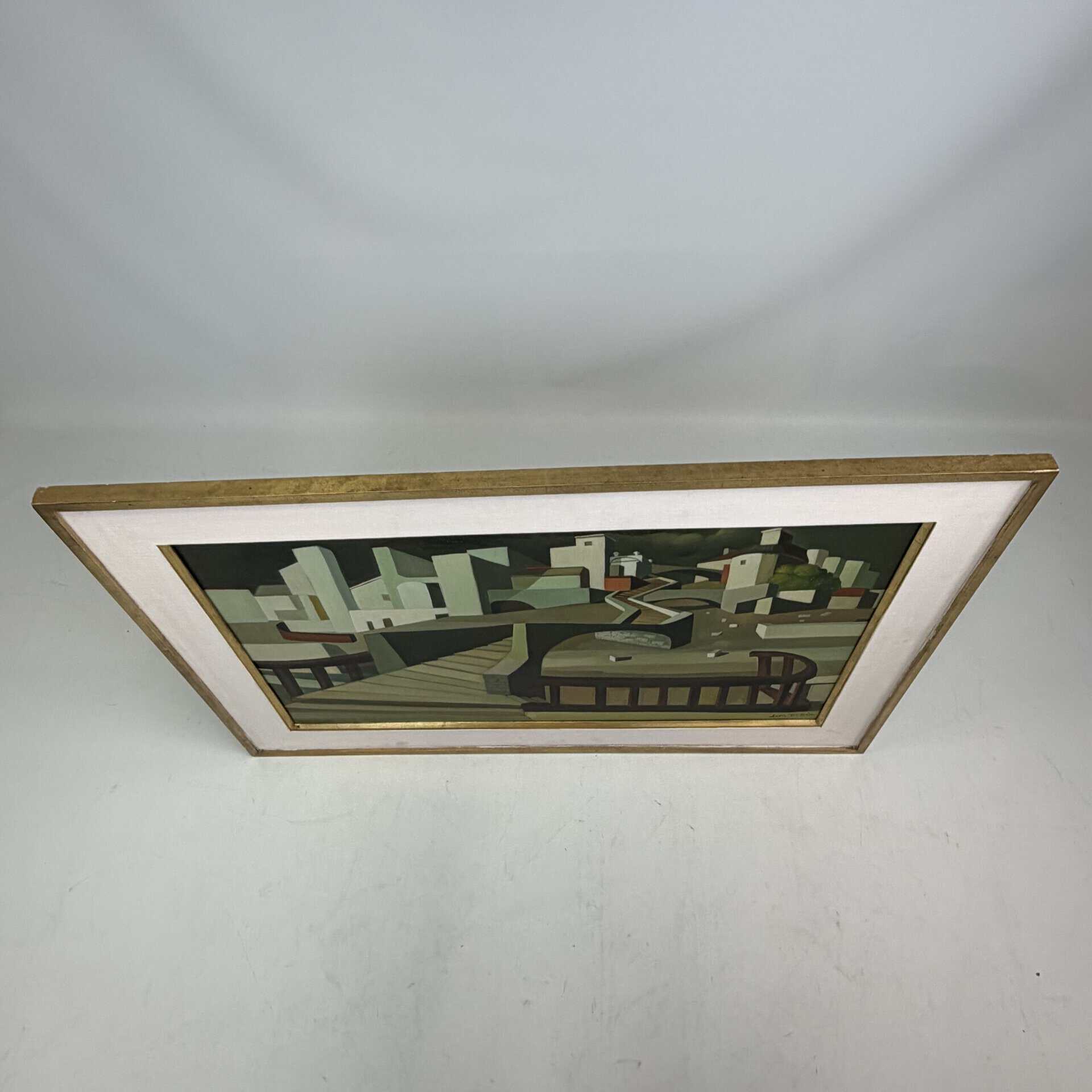
“Urban Landscape” reflects de Bie’s transition from his earlier, more traditional roots toward a modernist and cubist-influenced aesthetic. The use of flat planes of colour, geometric architecture, and a subdued, tonal palette (mostly greens, greys, and browns) is characteristic of his mid-career style.
Léon de Bie (1914-1983) was a significant figure in 20th-century Belgian art, associated with the Nervia group, which sought to balance modernism with traditional Flemish humanism
The mat serves as a visual buffer between the colourful painting and the wooden outer frame. The use of linen gives the work a warmer, more tactile feel than a cardboard mat, which is characteristic of the post-war modernist style in Belgium
A recessed frame was also used, creating a three-dimensional effect
This draws the viewer, as it were, into the ‘Urban Landscape’
Both the mat and the frame have a gold-coloured edge, creating a beautiful overall effect